Age 65/20, 50/20, and 55/15: Citizenship Test Exemptions and the 20 Starred Civics Questions
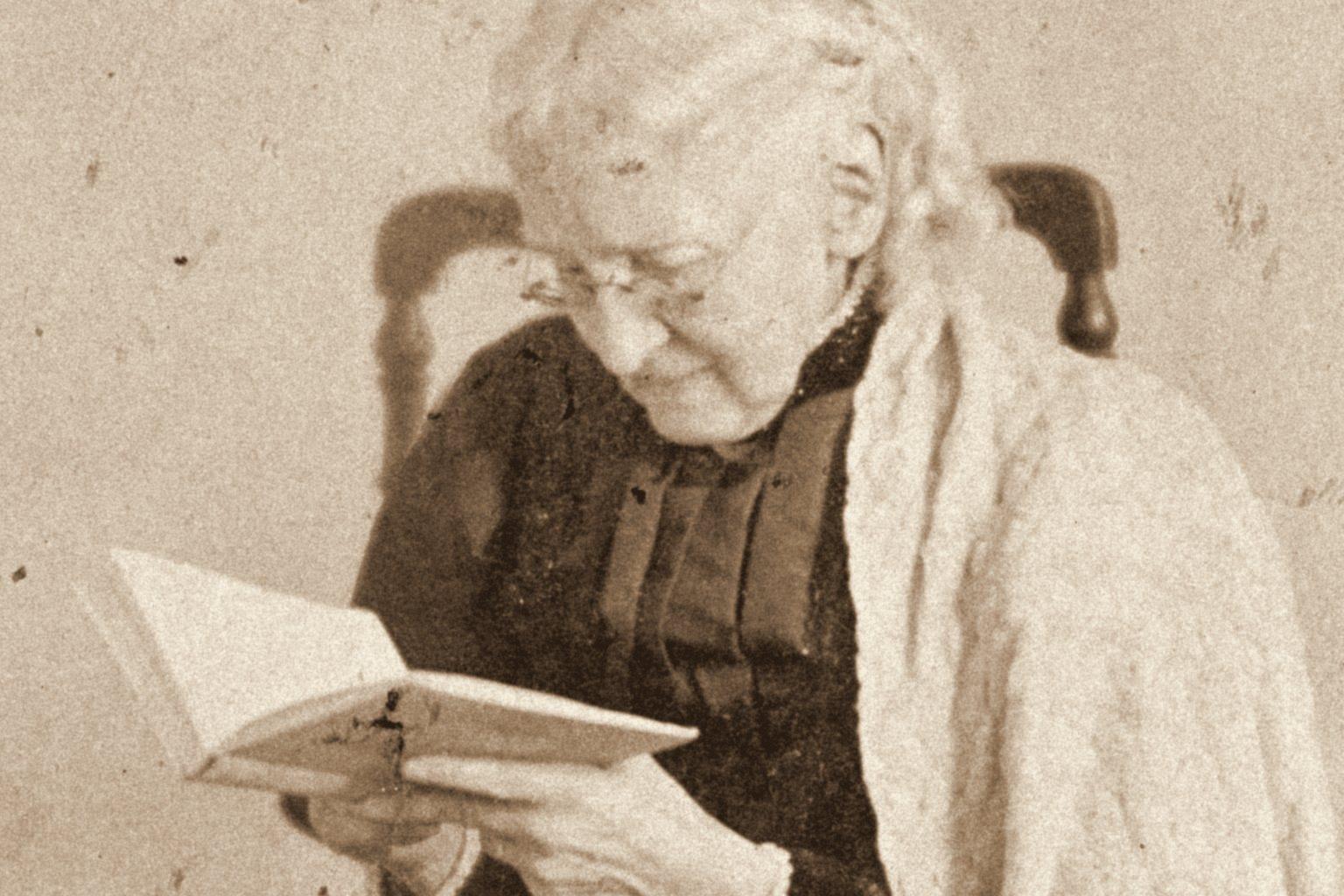
If you are older and have been a green card holder for many years, the naturalization test may be easier than you think. U.S. law gives three age-and-residence exceptions: 50/20 and 55/15 let you skip the English test, and 65/20 also gives you a shorter civics test from a list of just 20 starred questions. This guide explains each rule from official USCIS sources and lists all 20 starred questions for the 2025 civics test, so you know exactly what to study. Like the reader in the photo above, you can prepare a little at a time.
The three age exceptions at a glance
Per the USCIS Policy Manual, Volume 12, Part E, Chapter 2 and USCIS Exceptions and Accommodations:
| Exception | Age at filing | Years as a permanent resident (LPR) | English test | Civics test |
|---|---|---|---|---|
| 50/20 | 50 or older | at least 20 | Exempt | Required — may take it in your language with an interpreter |
| 55/15 | 55 or older | at least 15 | Exempt | Required — may take it in your language with an interpreter |
| 65/20 | 65 or older | at least 20 | Exempt | Required, but special consideration: 10 questions from the 20 starred questions; 6 correct to pass |
The key words are “at the time of filing.” Both the age and the years as a permanent resident are measured on the day you file Form N-400, not on the day of your interview. The law behind these rules is INA 312(b) (the Policy Manual cites INA 312(b)(3) for 65/20).
Tip: count your years from the “Resident Since” date on your green card. If you are a few months short, waiting to file until you qualify may change which test you take. Rules for counting time can be complicated (for example, after long trips abroad), so check the Policy Manual or ask an immigration attorney or DOJ-accredited representative if you are close to the line.
50/20 and 55/15: no English test, but civics is still required
USCIS says plainly: even if you qualify for 50/20 or 55/15, you must still take the civics test. What changes:
- You are exempt from the English requirement (speaking, reading, and writing).
- You may take the civics test in your native language (USCIS: “language of choice”).
- If you do, you must bring your own interpreter to the interview. USCIS says the interpreter must be fluent in both English and your native language.
For 50/20 and 55/15, the civics test itself is the regular 2025 test: up to 20 questions from the full 128-question bank, and you pass with 12 correct (the officer stops at 12 correct or 9 incorrect). That is why practicing the whole bank still matters. Study by topic: American Government, American History, and Symbols and Holidays.
65/20: a shorter civics test from 20 starred questions
The Policy Manual calls this special consideration. If you are 65 or older and have lived in the United States for periods totaling at least 20 years after becoming a permanent resident, when you file:
- You are exempt from English, and you may take civics in your language with an interpreter.
- You study only the 20 specially designated questions. On the official USCIS list they are marked with an asterisk (*).
- The officer asks 10 of those 20 questions. You pass with 6 correct (60%).
If you filed before October 20, 2025, you get the 20 starred questions from the 2008 test instead. Not sure which version applies to you? See Which civics test: 2008 vs 2025.
All 20 starred questions on the 2025 test (65/20 list)
These are the 20 questions marked with an asterisk on the official USCIS 128 Civics Questions and Answers (2025 version). Answers below are the official accepted answers (you need only one, unless the question asks for more).
American Government — A: Principles of American Government
- Q2. What is the supreme law of the land? — (U.S.) Constitution
- Q7. How many amendments does the U.S. Constitution have? — Twenty-seven (27)
- Q12. What is the economic system of the United States? — Capitalism / Free market economy
American Government — B: System of Government
- Q20. Name one power of the U.S. Congress. — Writes laws / Declares war / Makes the federal budget
- Q30. What is the name of the Speaker of the House of Representatives now? — Mike Johnson (as of October 2026; check USCIS test updates)
- Q36. The President of the United States is elected for how many years? — Four (4) years
- Q38. What is the name of the President of the United States now? — Donald J. Trump / Donald Trump / Trump (as of October 2026)
- Q39. What is the name of the Vice President of the United States now? — JD Vance / Vance (as of October 2026)
- Q44. Who vetoes bills? — The President (of the United States)
- Q52. What is the highest court in the United States? — Supreme Court
American Government — C: Rights and Responsibilities
- Q61. Who is the governor of your state now? — Answers will vary by state. (D.C. residents: D.C. does not have a governor.)
- Q66. What do we show loyalty to when we say the Pledge of Allegiance? — The United States / The flag
American History — A: Colonial Period and Independence
- Q74. Who lived in America before the Europeans arrived? — American Indians / Native Americans
- Q78. Who wrote the Declaration of Independence? — (Thomas) Jefferson
- Q86. George Washington is famous for many things. Name one. — “Father of Our Country” / First president of the United States / General of the Continental Army / President of the Constitutional Convention
American History — B: 1800s
- Q94. Abraham Lincoln is famous for many things. Name one. — Freed the slaves (Emancipation Proclamation) / Saved (or preserved) the Union / Led the United States during the Civil War / 16th president of the United States / Delivered the Gettysburg Address
American History — C: Recent American History and Other Important Historical Information
- Q113. Martin Luther King, Jr. is famous for many things. Name one. — Fought for civil rights / Worked for equality for all Americans / Worked to ensure that people would “not be judged by the color of their skin, but by the content of their character”
- Q115. What major event happened on September 11, 2001 in the United States? — Terrorists attacked the United States (or describe one of the four hijacked planes)
Symbols and Holidays — A: Symbols
- Q121. Why does the flag have 13 stripes? — (Because there were) 13 original colonies / (Because the stripes) represent the original colonies
Symbols and Holidays — B: Holidays
- Q126. Name three national U.S. holidays. — Any three of: New Year’s Day, Martin Luther King, Jr. Day, Presidents Day (Washington’s Birthday), Memorial Day, Juneteenth, Independence Day, Labor Day, Columbus Day, Veterans Day, Thanksgiving Day, Christmas Day
Four of these answers depend on who holds office now (Q30, Q38, Q39) or where you live (Q61). USCIS says you must answer with the official serving at the time of your interview, so check Check for Test Updates the week before.
Practice the 65/20 test (free)
Our free practice test has an Age 65 / 20 years mode. Choose it before you start, and you get up to 10 questions drawn only from the 20 starred questions, scored like the interview: 6 correct to pass. Also choose Your state so the governor answer matches where you live.
A simple plan that works for many older learners:
- Week 1: learn 5 questions a day from the list above, out loud. Say each answer three times.
- Week 2: take the 65/20 practice test once a day. Write down any question you miss.
- Week 3 and after: practice only the missed ones, plus one full practice test. If you will use an interpreter, practice with that person, so you both know how each question and answer sounds in your language.
Short deep dives for the harder starred questions: three branches of government, Declaration of Independence, George Washington, Lincoln and the Civil War, Martin Luther King Jr., American symbols, and national holidays.
If a disability makes the test impossible: Form N-648
The age exceptions are not the only option. If a physical or developmental disability or mental impairment prevents you from learning or showing English and/or civics knowledge, you may request a medical disability exception with Form N-648, Medical Certification for Disability Exceptions. Per USCIS:
- The condition must be medically determinable and have lasted, or be expected to last, at least 12 months (Policy Manual Vol. 12, Part E, Chapter 3).
- Only a medical doctor, doctor of osteopathy, or clinical psychologist licensed to practice in the United States may certify the form, after examining you in person (or by real-time telehealth where state law allows).
- You may submit N-648 with your N-400 or separately later. USCIS says there is no filing fee for Form N-648 (the medical professional may charge for the exam).
- USCIS warns about N-648 fraud scams. Use your own licensed doctor, and never pay someone who “guarantees” an exception.
An N-648 exception is different from a disability accommodation (such as extra time, a sign-language interpreter, or an off-site interview), which you can request at uscis.gov/accommodations as soon as you get your appointment notice.
“Due consideration” for everyone
Even if you do not qualify for an exception, the Policy Manual tells officers to use due consideration case by case when choosing and phrasing civics questions and judging answers, based on things like your age, background, level of education, and length of residence. It does not lower the passing score, but it is one more reason not to panic. And if you do not pass the first time, you get a second chance: see how the USCIS re-test works.
Quick checklist
- Check your age and “Resident Since” date as of the day you will file N-400.
- 50/20 or 55/15: no English test; study the full 128-question bank; bring an interpreter if you want civics in your language.
- 65/20: study the 20 starred questions above; practice in Age 65 / 20 years mode on the practice test; 6 of 10 to pass.
- Bring an interpreter who is fluent in English and your language, if you use one.
- Re-check the President, Vice President, Speaker, and your governor on USCIS Check for Test Updates.
Official sources
- USCIS Policy Manual: Volume 12, Part E, Chapter 2 — English and Civics Testing
- USCIS Policy Manual: Volume 12, Part E, Chapter 3 — Medical Disability Exception (Form N-648)
- USCIS: Exceptions and Accommodations
- USCIS: 128 Civics Questions and Answers (2025 version), PDF
- USCIS: Form N-648 and Check for Test Updates
This post summarizes public USCIS materials for educational purposes. It is not legal advice. Always follow the instructions on your own USCIS notices.