The Declaration of Independence on the 2025 Civics Test
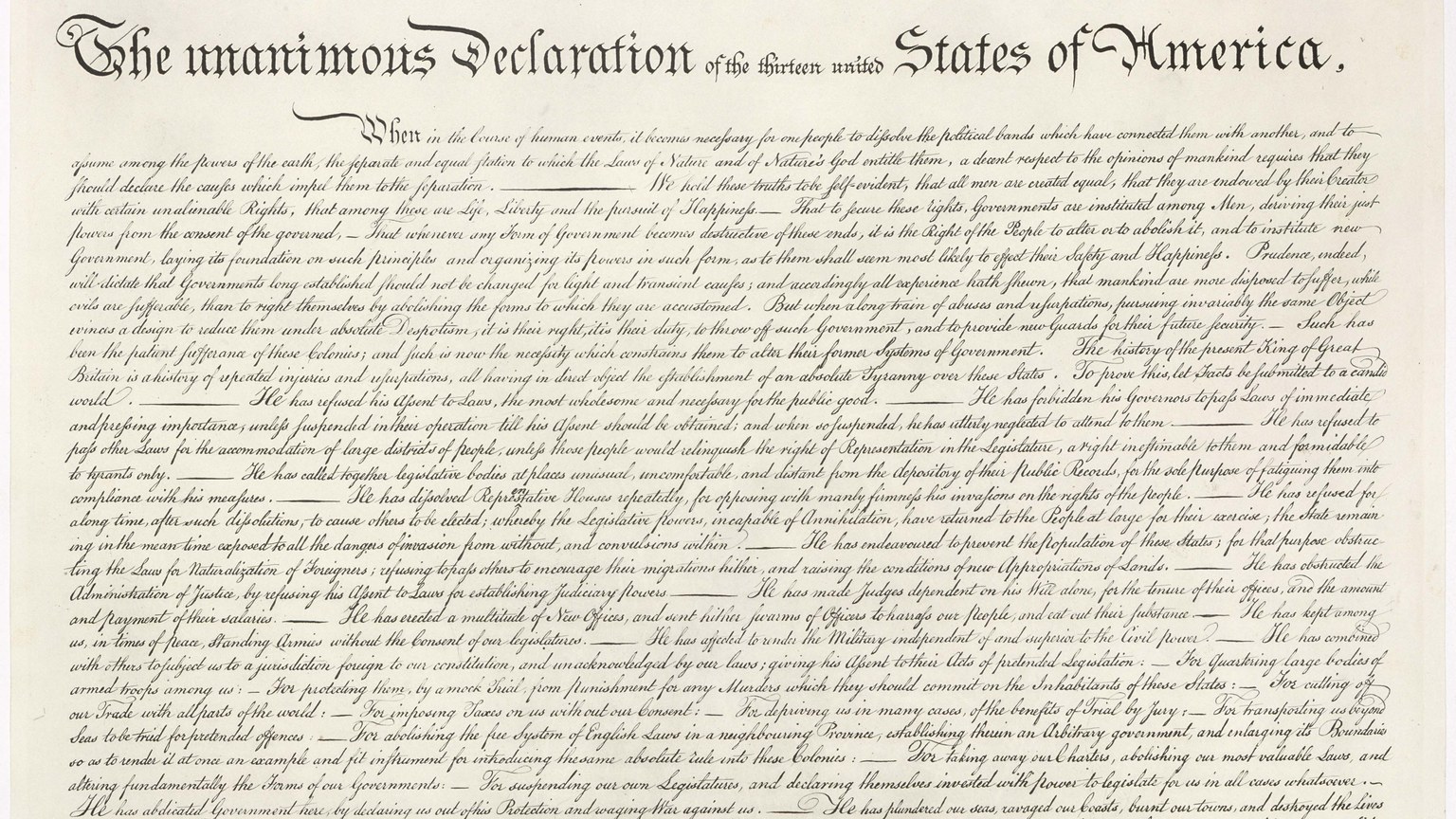
If you are studying for U.S. citizenship, the Declaration of Independence is one of the highest-value topics on the 2025 Naturalization Civics Test. Officers may ask why it is important, who wrote it, when it was adopted, and how it connects to Independence Day. Learn this cluster once and you unlock several related answers across American government and American history.
Why the Declaration of Independence matters
On the test you may hear: Why is the Declaration of Independence important? Accepted answers include:
- It says America is free from British control.
- It says all people are created equal.
- It identifies inherent rights.
- It identifies individual freedoms.
In plain language: the Declaration announced that the American colonies were free from Britain and stated big ideas about equality and rights that still show up in civics questions today. Closely related:
- The founding document that said the American colonies were free from Britain is the Declaration of Independence — Q9
- The words “Life, Liberty, and the pursuit of Happiness” are in the Declaration of Independence — Q11
Important ideas you may need to name
Name two important ideas from the Declaration of Independence and the U.S. Constitution. You only need two. Accepted ideas include:
- Equality
- Liberty
- Social contract
- Natural rights
- Limited government
- Self-government
Pick two you can say clearly under interview pressure — for example equality and liberty, or natural rights and self-government.
Who wrote it — and when was it adopted?
Two classic history questions:
| Question | Accepted answer (test-level) |
|---|---|
| Who wrote the Declaration of Independence? | (Thomas) Jefferson |
| When was the Declaration of Independence adopted? | July 4, 1776 |
Thomas Jefferson is also famous as a writer of the Declaration — that fact can appear when the officer asks what Jefferson is famous for (Q87 ). The date July 4, 1776 is the adoption date you must remember for Q79 .
The Declaration also appears as one accepted answer when you are asked to name an important event of the American Revolution — Q80 .
Independence Day connects to the same story
What is Independence Day? Accepted answers include:
- A holiday to celebrate U.S. independence (from Britain)
- The country’s birthday
Independence Day is celebrated because of the Declaration’s adoption on July 4, 1776. It is also one of the national U.S. holidays you may be asked to name — Q125 and Q126 .
How this shows up on test day
Think in a short chain:
- Why important? → free from British control / all people created equal / inherent rights / individual freedoms
- Who wrote it? → (Thomas) Jefferson
- When adopted? → July 4, 1776
- Holiday? → Independence Day celebrates U.S. independence / the country’s birthday
That pattern covers Q8 –Q11 , Q78 –Q79 , and the Independence Day holiday questions.
Your civics test has not changed
This is an evergreen study post, not a USCIS policy alert. The 2025 Naturalization Civics Test is unchanged: a 128-question bank; up to 20 questions at the interview; 12 correct to pass, for Form N-400 filed on or after October 20, 2025. Recent USCIS form and policy news does not rewrite these Declaration of Independence answers.
Study these related questions
- Principles of American Government — why the Declaration matters, founding documents, and key ideas (Q8–Q11)
- Colonial Period and Independence — Jefferson, July 4, 1776, and Revolution events (Q78–Q80)
- Symbols and Holidays — Independence Day and national holidays
- Free scored practice test — drill Declaration questions until the answers feel automatic
- Browse the full question list when you want one topic at a time
Tip: if the officer asks who wrote the Declaration, say Thomas Jefferson (or just Jefferson). If they ask when it was adopted, say July 4, 1776. If they ask why it is important, lead with America is free from British control or all people are created equal.
This post summarizes public USCIS civics materials for educational study. It is not legal advice.