Documents That Influenced the U.S. Constitution: Civics Test Q14 Explained
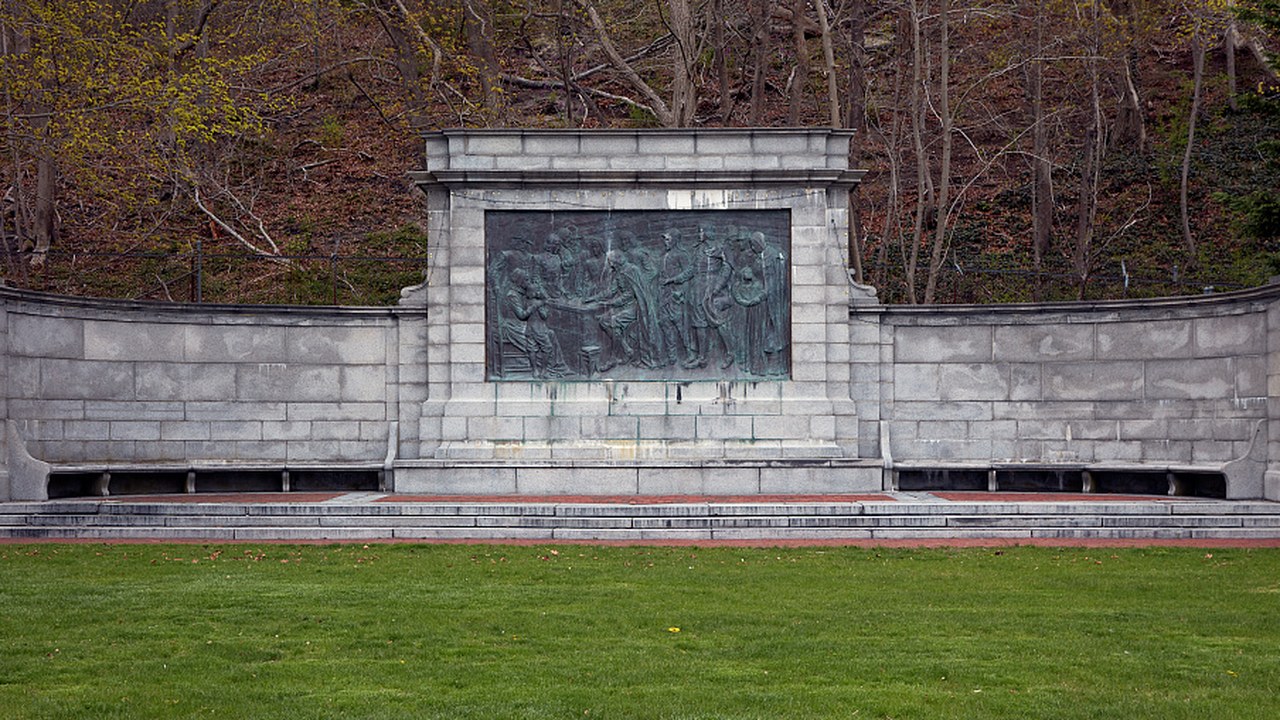
Many documents influenced the U.S. Constitution. Name one. (Q14) is one of the few questions on the 2025 Naturalization Civics Test with a long answer list, and the list is mostly names you may not have heard before. The good news: the question says “Name one,” so you only need one correct document. The photo above shows a memorial in Provincetown, Massachusetts, to the first document on the list.
id="name-one-document-that-influenced-the-constitution-q14">Name one document that influenced the Constitution (Q14)Accepted answers, from the official USCIS list:
- Declaration of Independence
- Articles of Confederation
- Federalist Papers
- Anti-Federalist Papers
- Virginia Declaration of Rights
- Fundamental Orders of Connecticut
- Mayflower Compact
- Iroquois Great Law of Peace
Which one should you learn? Pick the one you can say clearly and explain in a sentence if the officer asks. For most people that is the Declaration of Independence, because you already need it for Q9 and Q11. The Articles of Confederation and the Federalist Papers are the next easiest, because they connect to the story of how the Constitution was written. Learn the other names only if you want extra backup.
What each document is, in one line
These facts are study context only. On the test, one name is enough.
Document Year What to remember Mayflower Compact 1620 Signed by the Pilgrims before landing at Plymouth. An early agreement to govern themselves and make fair laws together. Fundamental Orders of Connecticut 1639 Written by settlers in the Connecticut colony to set up a government. Often described as one of the first written constitutions in the colonies. Iroquois Great Law of Peace long before 1600s (exact date debated) The founding agreement of the Haudenosaunee (Iroquois) Confederacy, which joined several nations under shared laws. Historians disagree about how much it influenced the Founders, but USCIS lists it as an accepted answer. Declaration of Independence 1776 Said the colonies were free from Britain, and that people have natural rights such as life, liberty, and the pursuit of happiness. Virginia Declaration of Rights 1776 Written mainly by George Mason. Listed basic rights of the people, and was an important model for the later Bill of Rights. Articles of Confederation written 1777, in force 1781 The first national government of the new states. It was weak (for example, Congress could not tax directly), so leaders met in 1787 and wrote a new plan: the Constitution. Federalist Papers 1787–1788 85 essays by Hamilton, Madison, and Jay (signed “Publius”) that explained the Constitution and urged states to approve it. Anti-Federalist Papers 1787–1788 Writings by people who opposed the new Constitution because they feared a strong central government and wanted a list of protected rights. Their concerns helped lead to the Bill of Rights (1791).
Why the Articles of Confederation matter
The Articles of Confederation are the easiest way to understand why there is a Constitution. The first national government left most power with the states and gave Congress little ability to raise money or enforce laws. After a few years it was clear that this did not work well, and delegates met in Philadelphia in 1787 to write something stronger. That is the answer to Q82: What founding document was written in 1787? The (U.S.) Constitution.
Connect it: the Federalist Papers questions (Q83, Q84)
The Federalist Papers appear twice more on the test, so one document gives you three answers:
- Q83. The Federalist Papers supported the passage of the U.S. Constitution. Name one of the writers. Accepted answers: (James) Madison, (Alexander) Hamilton, (John) Jay, or Publius.
- Q84. Why were the Federalist Papers important? Accepted answers: They helped people understand the (U.S.) Constitution, or They supported passing the (U.S.) Constitution.
More in The Federalist Papers and Benjamin Franklin.
Do not mix these up
- Q14 (influenced the Constitution) wants a document name. Q9 (What founding document said the American colonies were free from Britain?) wants only the Declaration of Independence. The Declaration is a correct answer to both, but the question decides which others also work.
- The Declaration is not the Constitution. The Declaration (1776) explains why the colonies broke away. The Constitution (1787) sets up how the government works. For the people behind the Constitution, see Who wrote the Constitution.
- Federalists vs. Anti-Federalists. Federalists supported ratifying the Constitution. Anti-Federalists opposed it as written. Both groups’ writings are accepted answers for Q14.
One-minute review
Question Say this Q14 — Name one document that influenced the Constitution Declaration of Independence (or Articles of Confederation, Federalist Papers, Anti-Federalist Papers, Virginia Declaration of Rights, Fundamental Orders of Connecticut, Mayflower Compact, Iroquois Great Law of Peace) Q9 — Founding document that said the colonies were free from Britain Declaration of Independence Q82 — Founding document written in 1787 (U.S.) Constitution Q83 — Name one Federalist Papers writer Madison, Hamilton, Jay, or Publius Q84 — Why were the Federalist Papers important? They helped people understand the Constitution / They supported passing it
Memory trick: The Constitution came from old agreements and new arguments. Old: Mayflower, Connecticut, Iroquois, Articles. New in 1776–88: Declaration, Virginia rights, Federalists, Anti-Federalists. Say one and you are done.
Study these related questions
- Principles of American Government: Q1–Q14 in context, with audio
- Principles of American government on the civics test: the surrounding questions on the Constitution and rule of law
- The Declaration of Independence: Q8, Q9, Q11, and Q78–Q79
- Why colonists came to America: the Mayflower and the colonial period
- Which civics test: 2008 vs 2025: check which question set applies to you
- Free scored practice test: 20 questions like the interview, 12 correct to pass
This is an evergreen study post. The answers come from the official USCIS 128 Civics Questions and Answers (2025 version), used for Form N-400 filed on or after October 20, 2025 (USCIS Policy Manual, Vol. 12, Part E, Ch. 2). Background details are from the National Archives on the Articles of Confederation and the Constitution, the Library of Congress Federalist Papers guide, and the Yale Avalon Project text of the Fundamental Orders of Connecticut. Photo: Library of Congress.
This post summarizes public USCIS civics materials for educational study. It is not legal advice.
Accepted answers, from the official USCIS list:
- Declaration of Independence
- Articles of Confederation
- Federalist Papers
- Anti-Federalist Papers
- Virginia Declaration of Rights
- Fundamental Orders of Connecticut
- Mayflower Compact
- Iroquois Great Law of Peace
Which one should you learn? Pick the one you can say clearly and explain in a sentence if the officer asks. For most people that is the Declaration of Independence, because you already need it for Q9 and Q11. The Articles of Confederation and the Federalist Papers are the next easiest, because they connect to the story of how the Constitution was written. Learn the other names only if you want extra backup.
What each document is, in one line
These facts are study context only. On the test, one name is enough.
| Document | Year | What to remember |
|---|---|---|
| Mayflower Compact | 1620 | Signed by the Pilgrims before landing at Plymouth. An early agreement to govern themselves and make fair laws together. |
| Fundamental Orders of Connecticut | 1639 | Written by settlers in the Connecticut colony to set up a government. Often described as one of the first written constitutions in the colonies. |
| Iroquois Great Law of Peace | long before 1600s (exact date debated) | The founding agreement of the Haudenosaunee (Iroquois) Confederacy, which joined several nations under shared laws. Historians disagree about how much it influenced the Founders, but USCIS lists it as an accepted answer. |
| Declaration of Independence | 1776 | Said the colonies were free from Britain, and that people have natural rights such as life, liberty, and the pursuit of happiness. |
| Virginia Declaration of Rights | 1776 | Written mainly by George Mason. Listed basic rights of the people, and was an important model for the later Bill of Rights. |
| Articles of Confederation | written 1777, in force 1781 | The first national government of the new states. It was weak (for example, Congress could not tax directly), so leaders met in 1787 and wrote a new plan: the Constitution. |
| Federalist Papers | 1787–1788 | 85 essays by Hamilton, Madison, and Jay (signed “Publius”) that explained the Constitution and urged states to approve it. |
| Anti-Federalist Papers | 1787–1788 | Writings by people who opposed the new Constitution because they feared a strong central government and wanted a list of protected rights. Their concerns helped lead to the Bill of Rights (1791). |
Why the Articles of Confederation matter
The Articles of Confederation are the easiest way to understand why there is a Constitution. The first national government left most power with the states and gave Congress little ability to raise money or enforce laws. After a few years it was clear that this did not work well, and delegates met in Philadelphia in 1787 to write something stronger. That is the answer to Q82: What founding document was written in 1787? The (U.S.) Constitution.
Connect it: the Federalist Papers questions (Q83, Q84)
The Federalist Papers appear twice more on the test, so one document gives you three answers:
- Q83. The Federalist Papers supported the passage of the U.S. Constitution. Name one of the writers. Accepted answers: (James) Madison, (Alexander) Hamilton, (John) Jay, or Publius.
- Q84. Why were the Federalist Papers important? Accepted answers: They helped people understand the (U.S.) Constitution, or They supported passing the (U.S.) Constitution.
More in The Federalist Papers and Benjamin Franklin.
Do not mix these up
- Q14 (influenced the Constitution) wants a document name. Q9 (What founding document said the American colonies were free from Britain?) wants only the Declaration of Independence. The Declaration is a correct answer to both, but the question decides which others also work.
- The Declaration is not the Constitution. The Declaration (1776) explains why the colonies broke away. The Constitution (1787) sets up how the government works. For the people behind the Constitution, see Who wrote the Constitution.
- Federalists vs. Anti-Federalists. Federalists supported ratifying the Constitution. Anti-Federalists opposed it as written. Both groups’ writings are accepted answers for Q14.
One-minute review
| Question | Say this |
|---|---|
| Q14 — Name one document that influenced the Constitution | Declaration of Independence (or Articles of Confederation, Federalist Papers, Anti-Federalist Papers, Virginia Declaration of Rights, Fundamental Orders of Connecticut, Mayflower Compact, Iroquois Great Law of Peace) |
| Q9 — Founding document that said the colonies were free from Britain | Declaration of Independence |
| Q82 — Founding document written in 1787 | (U.S.) Constitution |
| Q83 — Name one Federalist Papers writer | Madison, Hamilton, Jay, or Publius |
| Q84 — Why were the Federalist Papers important? | They helped people understand the Constitution / They supported passing it |
Memory trick: The Constitution came from old agreements and new arguments. Old: Mayflower, Connecticut, Iroquois, Articles. New in 1776–88: Declaration, Virginia rights, Federalists, Anti-Federalists. Say one and you are done.
Study these related questions
- Principles of American Government: Q1–Q14 in context, with audio
- Principles of American government on the civics test: the surrounding questions on the Constitution and rule of law
- The Declaration of Independence: Q8, Q9, Q11, and Q78–Q79
- Why colonists came to America: the Mayflower and the colonial period
- Which civics test: 2008 vs 2025: check which question set applies to you
- Free scored practice test: 20 questions like the interview, 12 correct to pass
This is an evergreen study post. The answers come from the official USCIS 128 Civics Questions and Answers (2025 version), used for Form N-400 filed on or after October 20, 2025 (USCIS Policy Manual, Vol. 12, Part E, Ch. 2). Background details are from the National Archives on the Articles of Confederation and the Constitution, the Library of Congress Federalist Papers guide, and the Yale Avalon Project text of the Fundamental Orders of Connecticut. Photo: Library of Congress.
This post summarizes public USCIS civics materials for educational study. It is not legal advice.