Can You Keep Your Other Citizenship After You Naturalize? The Oath, Dual Nationality and Your Passports
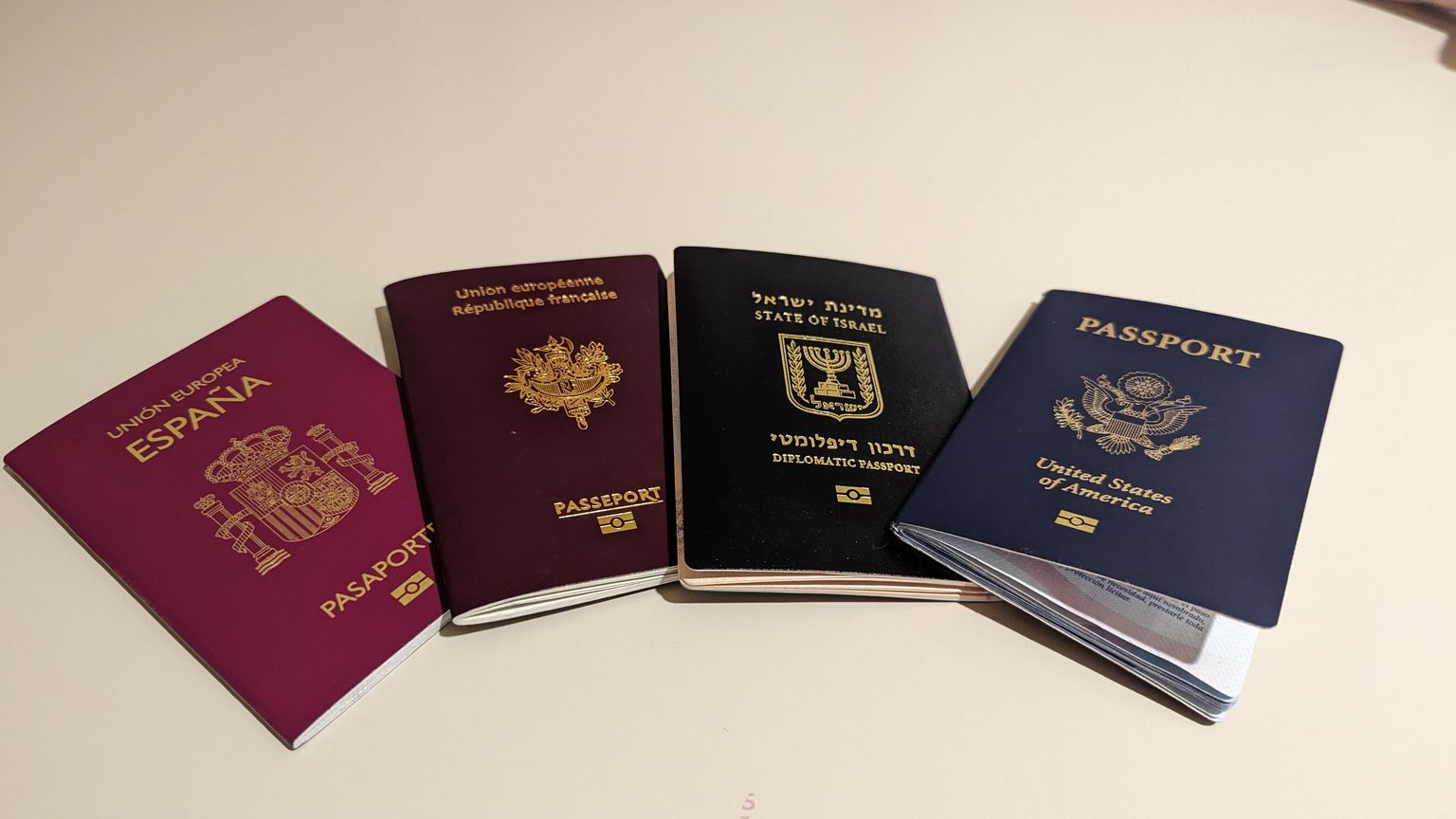
“Will I lose my citizenship from back home?” is one of the most common worries before the oath ceremony. The oath has strong words in it, and the civics test even asks about them. Here is the short answer, then the details.
Short answer: U.S. law does not make you choose. The U.S. government allows dual nationality, although it doesn’t encourage it. Whether you keep your first citizenship is decided by your other country’s law, not by the U.S. oath. And once you are a U.S. citizen, you must use a U.S. passport to leave and enter the United States.
The words that worry people
The Oath of Allegiance (8 CFR 337.1) begins:
“I hereby declare, on oath, that I absolutely and entirely renounce and abjure all allegiance and fidelity to any foreign prince, potentate, state, or sovereignty, of whom or which I have heretofore been a subject or citizen; that I will support and defend the Constitution and laws of the United States of America against all enemies, foreign and domestic; …”
The civics test turns that first promise into a short answer:
- Q67. Name two promises that new citizens make in the Oath of Allegiance. Accepted answers include Give up loyalty to other countries, Defend the (U.S.) Constitution, Obey the laws of the United States, Serve in the military (if needed), Serve (help, do important work for) the nation (if needed) and Be loyal to the United States.
So yes: you promise your allegiance to the United States, and you should mean it. But the oath is a promise about loyalty. It is not a form that cancels your other passport. The State Department’s own manual says the oath “doesn’t mean the foreign country does not still regard you as a citizen of that country,” and that some countries don’t treat naturalization abroad as a reason to lose their nationality (7 FAM 080).
For the test, keep it simple. Give up loyalty to other countries is still a correct answer for Q67, whatever your home country’s law says. You can learn the other accepted promises in our Oath of Allegiance promises post.
What U.S. law says
From the State Department’s Dual Nationality page and the Foreign Affairs Manual (7 FAM 080):
- U.S. law does not require a U.S. citizen to choose between U.S. citizenship and another nationality.
- The U.S. recognizes dual nationality but doesn’t encourage it as a matter of policy, because of the problems it can cause (see below).
- Dual nationals owe allegiance to both countries and must obey the laws of both. Either country can enforce its laws, especially when you are on its territory.
- Losing U.S. citizenship takes a voluntary act done with the intent to give it up, such as formally renouncing it at a U.S. embassy (INA 349, 8 U.S.C. 1481). Keeping or later using your other passport doesn’t do that.
One separate warning: naturalization obtained by fraud or by hiding facts on the N-400 can be taken away in court. That has nothing to do with dual nationality. It is about telling the truth on your application.
Your other country decides whether you keep its citizenship
Every country writes its own nationality law, and the rules are very different. A few well-known examples (always confirm with that country’s embassy or consulate, because laws change):
| Country | General rule for its citizens who naturalize elsewhere |
|---|---|
| Mexico | Mexican nationality by birth can’t be taken away (Mexican Constitution, Art. 37). |
| Philippines | Natural-born Filipinos can keep or reacquire Philippine citizenship by taking an oath under Republic Act 9225. |
| Germany | Since June 27, 2024, Germans generally keep German citizenship when they naturalize in another country. Before that date, many lost it automatically unless they had a retention permit. |
| India | Indian citizenship ends when you voluntarily acquire another citizenship (Citizenship Act, 1955, Sec. 9). Many former citizens apply for an Overseas Citizen of India (OCI) card instead. |
| China | A Chinese national who settles abroad and voluntarily naturalizes elsewhere automatically loses Chinese nationality (Nationality Law, Art. 9). |
If your country does not allow dual nationality, ask its consulate before your oath ceremony what you need to do, such as handing in your old passport, applying for a visa or an overseas-citizen card, and handling property or inheritance. Some countries also expect you to report the change yourself.
The passport rule after your oath
This is the rule that catches new citizens at the airport.
- Leave and enter the U.S. on your U.S. passport. Federal law (8 U.S.C. 1185(b)) requires U.S. citizens, including dual nationals, to use a U.S. passport to exit and enter the United States, with limited exceptions.
- Your green card is gone. You hand it in at the oath ceremony, so you can’t use it to come back. Apply for your first U.S. passport before you plan any trip.
- No visa or ESTA on your foreign passport. U.S. citizens are not eligible for a U.S. visa, and the State Department warns that DHS denies or cancels ESTAs for dual nationals who apply on their foreign passport.
- Your other passport is fine elsewhere. Using your foreign passport to travel to or from a country other than the United States is “not inconsistent with U.S. law,” and your other country may require you to use its passport at its own border.
- Consular help may be limited when you are in your other country, because that country has the stronger claim on you there.
- U.S. tax rules follow you. U.S. citizens must comply with U.S. tax law wherever they live.
Tip: book a passport appointment for the first days after your ceremony and don’t buy international tickets until the passport is in your hands. Our first passport guide covers Form DS-11, fees and processing times.
At the interview: the oath questions on your N-400
Part 9 of Form N-400 (edition 01/20/25, items 31 to 37) asks whether you support the Constitution, whether you understand the full Oath of Allegiance, and whether you are willing to take the full Oath. The officer will go over these with you, and some officers ask what the oath means in your own words.
A clear, honest answer is something like: “I will be loyal to the United States, support the Constitution and obey U.S. laws.” You don’t need to say anything about your other passport unless you are asked. If you are asked, answer honestly. Knowing that your home country may still count you as its citizen doesn’t make you unwilling to take the oath.
If religious or other beliefs make parts of the oath hard for you, you can ask to affirm instead of swearing, or ask for a modified oath. See Oath of Allegiance: affirm, modify or waive.
Study the related civics questions
- Q67. Name two promises that new citizens make in the Oath of Allegiance. Give up loyalty to other countries / Defend the (U.S.) Constitution
- Q68. How can people become United States citizens? Naturalize (also: be born in the U.S. under the conditions set by the 14th Amendment; derive citizenship)
- Q64. Who can vote in federal elections, run for federal office, and serve on a jury? Citizens. Dual citizens are full U.S. citizens, so this includes you after your oath.
- Practice them out loud with the free civics practice test, or hear them in Listen quiz mode.
Sources: USCIS, Naturalization Oath of Allegiance to the United States of America; U.S. Department of State, Dual Nationality and 7 FAM 080 Dual Nationality; 8 U.S.C. 1185(b) (U.S. passport to exit and enter); 8 U.S.C. 1481 (loss of nationality); USCIS Form N-400, edition 01/20/25, Part 9 items 31–37; USCIS 2025 Civics Test, 128 Questions and Answers (PDF). Country rules summarized from each country’s nationality law; check with that country’s embassy for your case. Photo: Horizon206, via Wikimedia Commons (CC0).
CitizenExams is an independent study site and is not affiliated with USCIS or the State Department. This post is general information, not legal advice. If your other citizenship affects property, military service, a job or a security clearance, talk to an immigration attorney and to your other country’s consulate.