Election Week Study Plan: 15 Civics Test Answers You Can Watch Happen on November 3
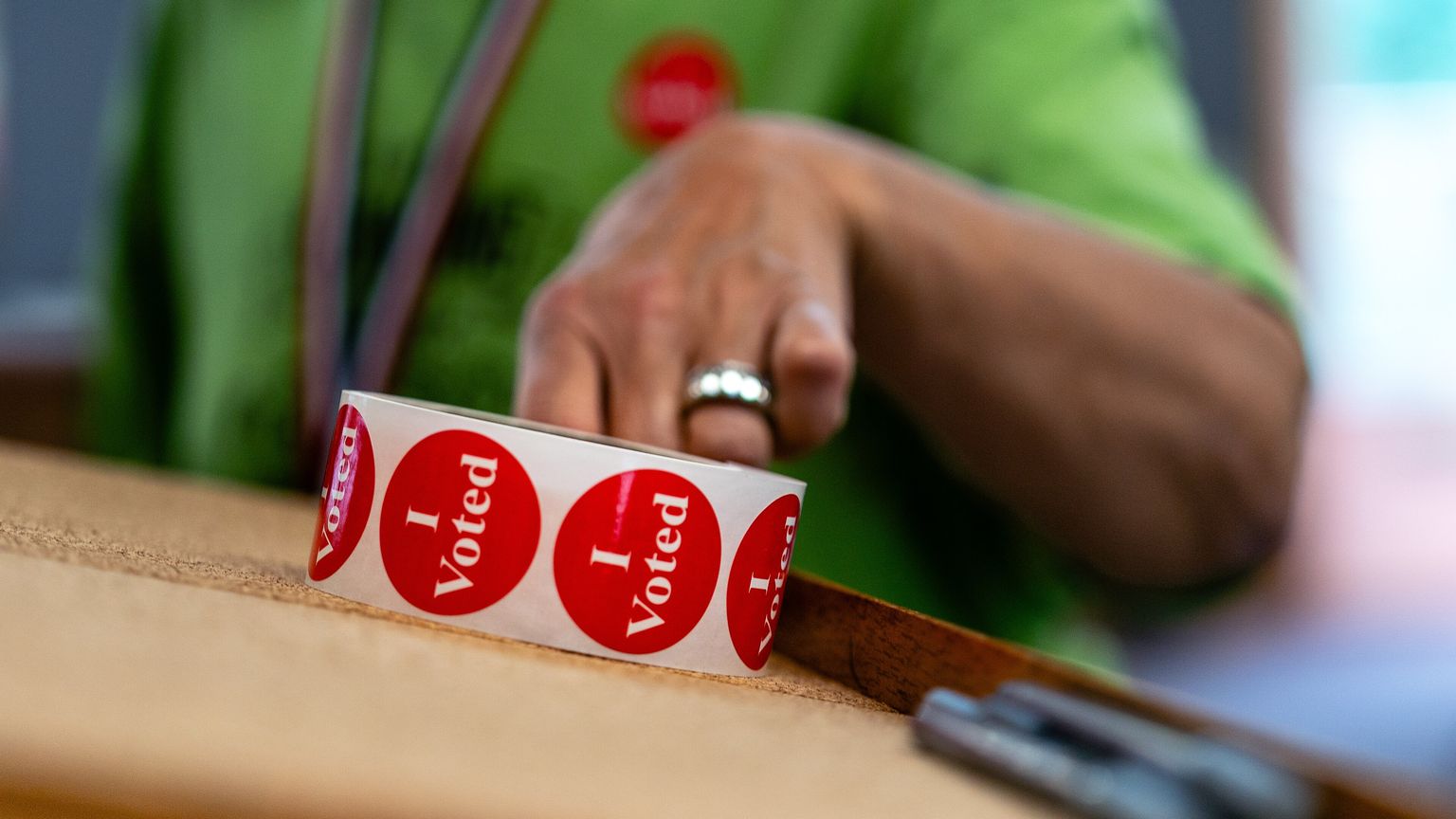
Tuesday, November 3, 2026 is Election Day. For the next few days the news will be full of words like House, Senate, district and governor. Each of those is an answer on the 2025 civics test. This week you can learn them by watching them happen, not only by reading a list.
This post is nonpartisan. It does not discuss candidates or parties. It only connects what is on the ballot to the questions the USCIS officer can ask you.
First, if you are not a citizen yet: do not vote
Voting is the clearest example of a right that belongs only to citizens. That’s Q64: Who can vote in federal elections, run for federal office, and serve on a jury? Citizens.
If you have a green card, do not register and do not vote, even if someone at a store, a DMV or a campaign table tells you it’s fine. Federal law makes it a crime for a noncitizen to vote in a federal election (18 U.S.C. § 611), and Form N-400 asks whether you have ever registered to vote or voted. A wrong vote can delay or block your citizenship. Our post on green card holders and illegal voting charges explains the risk. This week, watch the election and study. Your turn to vote comes after your oath ceremony.
What is on the ballot, and which questions it answers
| On the ballot Nov 3 | Civics test answer it shows |
|---|---|
| All 435 seats in the House of Representatives | Q24: 435 voting members. Q25: a term is 2 years, so every seat is up every two years. |
| 35 of the 100 Senate seats (33 regular seats plus 2 special elections, in Florida and Ohio) | Q21: 100 senators. Q22: a term is 6 years, so only about one-third of the Senate is elected at a time. |
| Every House seat up, but only some Senate seats | Q26: representatives serve shorter terms to more closely follow public opinion. Midterms are that idea in action. |
| Senate races are statewide; House races are by district | Q31–Q34: a senator represents, and is elected by, the citizens of their state; a representative represents, and is elected by, the citizens of their congressional district. |
| Big states have many House races, small states have few | Q35: some states have more representatives because of the state’s population. |
| 36 states elect a governor | Q61: Who is the governor of your state now? |
| No presidential race this year | Q36: the president is elected for 4 years. A “midterm” falls halfway through that term. |
Those numbers (435 House seats, 35 Senate seats including the Florida and Ohio special elections, 36 governors) come from the 2026 election calendar. Ballotpedia has a clear Senate overview. For the House, the “every seat, every two years” rule comes straight from Article I of the Constitution.
One rule to remember: winners don’t change your answers yet
For Q23 (your senator), Q29 (your representative) and Q61 (your governor), USCIS expects you to name the person serving on the day of your interview. Someone who wins on November 3 is not your senator or representative until they take office. For Congress, that is January 3, 2027 (20th Amendment). Inauguration dates for governors depend on the state. Our midterms and the civics test post goes through every answer that could change, and when.
The 6-day plan (10–15 minutes a day)
Do one block each day. Say every answer out loud, because the civics test is an oral test.
Friday, Oct 30: the numbers. Q21, Q22, Q24, Q25, Q36. Say them as one line: “100 senators, 6 years; 435 representatives, 2 years; president, 4 years.” More number questions: civics test numbers to memorize.
Saturday, Oct 31: who represents whom. Q31–Q35. Use your own address: find your congressional district on house.gov and say, “My representative represents the people of my district.”
Sunday, Nov 1: who can vote. Q63 (the four voting amendments), Q64, Q98, Q102. The short version: 15th (race), 19th (women), 24th (no poll tax), 26th (age 18). Details: voting amendments on the civics test.
Monday, Nov 2: civic participation. Q69 and Q70. You’ll see many of these answers on TV this week: vote, help with a campaign, join a political party, contact elected officials. Pick two you can say quickly.
Tuesday, Nov 3 (Election Day): listen. Watch or listen to 15 minutes of election coverage in English. Every time you hear Senate, House, district or governor, say the matching question number. That’s real listening practice for the interview. Then do 10 questions on Listen in Quiz me mode.
Wednesday, Nov 4: test yourself. Take a 20-question practice test. Then check that your Q23, Q29 and Q61 answers are still the people serving now. Use My officials and pick your state (it lists your senators and governor; find your representative on house.gov).
Election words to know (English test help)
Vote, elect(s), Senators, Congress, citizen(s) and right are on the official USCIS reading and writing vocabulary lists. The officer might give you a sentence like “Citizens can vote” or “The people elect Congress.” You’ll hear these words too:
| Word | Meaning |
|---|---|
| ballot | the paper or screen where a voter marks their choices |
| polling place | where people go to vote in person |
| district | the area a member of the House represents |
| incumbent | the person who has the job now and is running again |
| majority | more than half (51 of 100 senators, 218 of 435 representatives) |
| mail / absentee ballot | a ballot sent in by mail instead of voting in person |
Practice writing two sentences tonight: “Citizens can vote.” and “The people elect Congress.” More practice is on English test practice.
Quick self-check
- I can say how many senators and representatives there are, and how long each term is.
- I know who a senator represents (the state) and who a representative represents (the district).
- I can name one voting amendment.
- I know only citizens can vote in federal elections, and I won’t vote until I’m a citizen.
- I know my answers for Q23, Q29 and Q61 are the people serving on my interview day.
Not sure which test you’re taking? If you filed your N-400 before October 20, 2025, you may have the 2008 test instead. See 2008 vs. 2025: which civics test am I taking?
Sources
- USCIS: 2025 Civics Test, 128 Questions and Answers (PDF), Q21–Q26, Q29, Q31–Q36, Q61, Q63, Q64, Q69, Q70, Q98, Q102
- USCIS: Reading and writing vocabulary for the naturalization test
- USCIS: Form N-400, Application for Naturalization (voting and registering-to-vote questions)
- 18 U.S.C. § 611, Voting by aliens
- Ballotpedia: United States Senate elections, 2026 and Gubernatorial elections, 2026
This post is for study and preparation. It is not legal advice and does not support any candidate or party.
Photo: Lorie Shaull, via Wikimedia Commons from Flickr (CC BY 4.0).