Federal vs. State Powers on the 2025 Civics Test
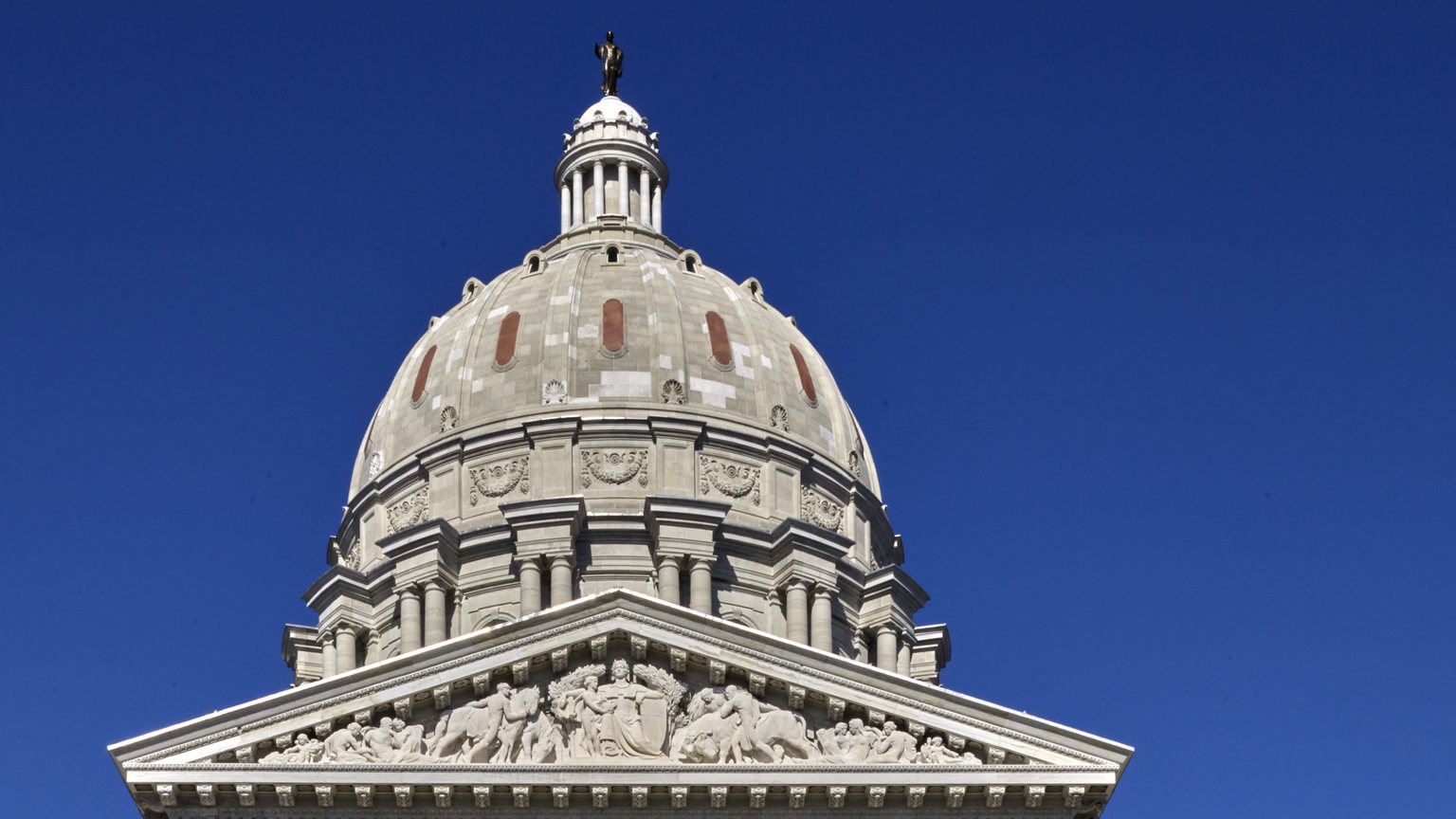
The United States splits power between the federal (national) government and the state governments. That idea is called federalism, and the 2025 Naturalization Civics Test asks about it directly in a compact block: Q58–Q62. Learn which powers belong only to Washington, which belong only to the states, what the 10th Amendment says, and the names of your governor and state capital. The hero photo above shows a state capitol — the seat of state government — in Jefferson City, Missouri.
Name one power that is only for the federal government
Name one power that is only for the federal government. (Q58) Accepted answers:
- Print paper money
- Mint coins
- Declare war
- Create an army
- Make treaties
- Set foreign policy
Any one is enough. Short safe picks: print paper money or declare war.
Memory hook: things the whole country must do with one voice — money, war, treaties, and dealing with other countries — belong to the federal government.
Name one power that is only for the states
Name one power that is only for the states. (Q59) Accepted answers:
- Provide schooling and education
- Provide protection (police)
- Provide safety (fire departments)
- Give a driver’s license
- Approve zoning and land use
Any one is enough. Short safe picks: give a driver’s license or provide schooling and education.
Memory hook: things you deal with close to home — your driver’s license, your kids’ school, local police and fire service, and what can be built on your street — are state powers.
Don’t mix them up: “print money” is federal, “driver’s license” is state. If you hesitate, ask yourself: does this need to be the same in every state? If yes, it is probably federal.
What is the purpose of the 10th Amendment?
What is the purpose of the 10th Amendment? (Q60) Accepted answer:
- (It states that the) powers not given to the federal government belong to the states or to the people.
A short way to say it on test day: “Powers not given to the federal government belong to the states or to the people.” The 10th Amendment is the last amendment in the Bill of Rights, and it is the constitutional root of federalism.
Who is the governor of your state now?
Who is the governor of your state now? (Q61) Official USCIS answer:
- Answers will vary. [District of Columbia residents should answer that D.C. does not have a governor.]
Your answer depends on where you live. The governor is the head of the executive branch of your state — the state-level counterpart to the President. Governors change after elections, so confirm the name close to your interview date using your state’s official government website. USCIS asks you to answer with the official serving at the time of your interview.
What is the capital of your state?
What is the capital of your state? (Q62) Official USCIS answer:
- Answers will vary. [District of Columbia residents should answer that D.C. is not a state and does not have a capital. Residents of U.S. territories should name the capital of the territory.]
Watch out: the capital is often not the biggest city. Examples: New York’s capital is Albany (not New York City), California’s is Sacramento (not Los Angeles), Texas’s is Austin (not Houston), Florida’s is Tallahassee (not Miami), and Illinois’s is Springfield (not Chicago). The capitol building in the photo above is in Jefferson City, the capital of Missouri — not St. Louis or Kansas City.
Practice tip: on our free practice test, choose Your state before you start. The test then checks your answers to the location questions — your governor (Q61), state capital (Q62), and U.S. senators (Q23) — against the state you picked.
How this shows up on test day
Think in a short chain:
- Only federal? → print paper money / declare war / make treaties
- Only states? → give a driver’s license / provide schooling and education
- 10th Amendment? → powers not given to the federal government belong to the states or to the people
- Your governor? → the current governor of the state where you live (D.C.: no governor)
- Your state capital? → your state’s capital city (D.C.: not a state, no capital; territories: the territory’s capital)
Nearby answers worth linking
Federalism connects to several other questions on the 2025 list:
- What is the form of government of the United States? (Q1) → one accepted answer is constitution-based federal republic — see Principles of American Government
- Who is one of your state’s U.S. senators now? (Q23) and Name your U.S. representative (Q29) — answers vary by where you live; see Congress: House and Senate
- How many senators does each state have? (Q27) → two (2) — and why (Q28) → equal representation (for small states) / the Great Compromise
- Three branches of government — separation of powers inside the federal government, which states mirror with their own governor, legislature, and courts
- U.S. territories — if you live in a territory, location answers follow the territory notes on the official list
Study tip: for “answers will vary” questions, write your personal answers — governor, capital, senators, representative — on a small card and say them out loud every day of interview week.
Your civics test has not changed
This is an evergreen study post, not a USCIS policy alert. The 2025 Naturalization Civics Test remains a 128-question bank; the officer asks 20 questions at the interview, and you need 12 correct to pass, for Form N-400 filed on or after October 20, 2025. Which version you take still follows your filing date — see Which civics test: 2008 vs 2025 and official USCIS Check for Test Updates. The accepted answers above are quoted from the official 128 Civics Questions and Answers (PDF), where Q58–Q62 close out the System of Government section. Official study materials: USCIS Study for the Test.
Study these related questions
- Q58–Q62 with audio — federal powers, state powers, 10th Amendment, governor, and capital (with the rights and responsibilities questions that follow)
- System of Government — Congress, the President, and the courts, with a state picker for location answers
- American Government — Principles, System, and Rights
- Free scored practice test — pick your state, then drill federal vs. state powers until the answers feel automatic
- Browse all study topics when you want one section at a time
- Build a habit with a daily civics study schedule
Tip: if the officer asks for a power only for the federal government, say print paper money. If they ask for a power only for the states, say give a driver’s license. For the 10th Amendment, say powers not given to the federal government belong to the states or to the people.
This post summarizes public USCIS civics materials for educational study. It is not legal advice.