Got a Form N-14 After Your Citizenship Interview? How to Answer a USCIS Request for Evidence
Your citizenship interview is over, but instead of “approved,” the officer handed you a form asking for more documents. That form is usually a Form N-14, Request for Evidence. It feels scary, but it is not a denial. It means the officer needs one or more papers before deciding your case, and USCIS gives you a set amount of time to send them.
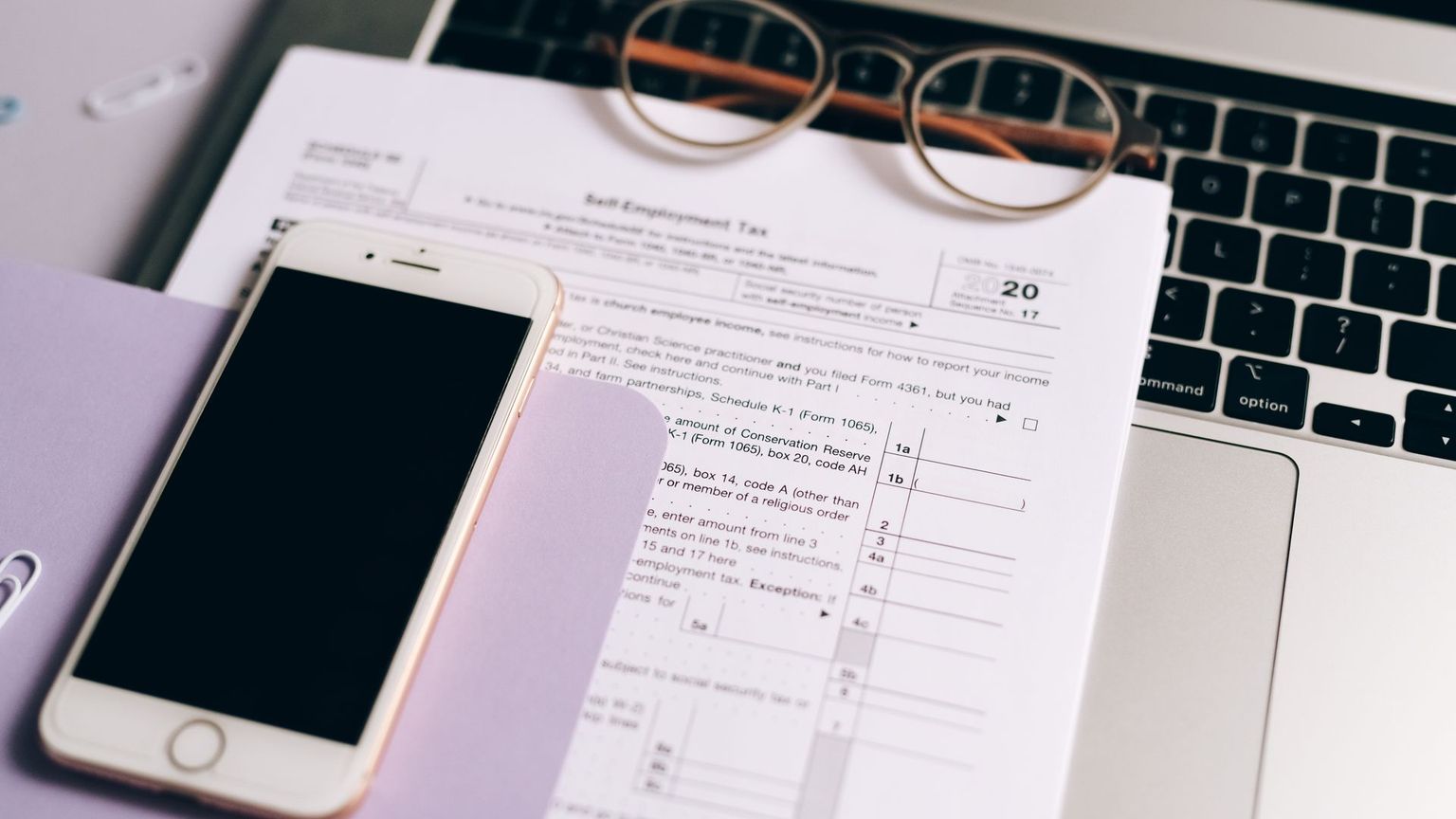
Tax papers, a phone and a laptop, like in the photo, are often all you need: many N-14 requests are for records you can order online, scan and send. Here is how the process works, using USCIS’s own rules.
The short version
| Step | What to do |
|---|---|
| 1. Read the notice | The N-14 lists what USCIS wants, how to send it and the due date. |
| 2. Count your days | USCIS generally allows 30 days, plus 3 days if the notice was mailed. Go by the date on your notice. |
| 3. Gather everything | Ask for court records, tax transcripts and other papers today. They can take weeks. |
| 4. Send one complete package | All documents together, at one time, with a copy of the N-14 on top. |
| 5. Keep proof | Tracking number or upload confirmation, plus a copy of every page. |
| 6. Watch your case | The officer decides after your response arrives. Keep studying in the meantime. |
What a Form N-14 is
At the end of every naturalization interview, the officer gives you a written result, usually on Form N-652, Notice of Examination Results. If the officer needs more information, the case is continued and you get a written Request for Evidence. The USCIS Policy Manual says the officer “issues a Request for Evidence on Form N-14” and that it should include (USCIS Policy Manual, Vol. 12, Part B, Ch. 4):
- The specific documents or information the officer wants,
- The ways you can respond, and
- The date by which you must reply.
Getting an N-14 often means the interview went fine and only a paper is missing. It doesn’t tell you whether your case will be approved. That depends on what you send. To see all the possible interview results, read approved, continued or denied.
How much time you have
- 30 days is the general rule. The Policy Manual says “USCIS permits a period of 30 days for the applicant to respond” to a Request for Evidence in a naturalization case.
- 3 more days if it was mailed. When a notice is served by mail, “3 days shall be added to the prescribed period” (8 CFR 103.8(b)). If the officer handed you the N-14 at the interview, don’t count on the extra days.
- The date on your notice wins. Always follow the due date printed on your N-14.
- No extensions. USCIS rules say “Additional time to respond to a request for evidence or notice of intent to deny may not be granted” (8 CFR 103.2(b)(8)(iv)). Don’t plan on asking for more time.
Thanksgiving note: tomorrow, Thursday, November 26, 2026, is a federal holiday (OPM). USCIS offices are closed and there is no regular mail delivery. If your due date falls on a weekend or a federal holiday, a paper response generally counts as on time if USCIS receives it by the next business day, but an online response doesn’t get an extra day. See how USCIS treats deadlines on weekends and holidays. The safe plan is to send everything well before the date on your notice.
What officers often ask for
Every N-14 is different. These are common examples, depending on what came up in the interview:
| What came up | What the officer may ask for |
|---|---|
| An arrest, ticket or court case | Certified court records showing the final result (the “disposition”), or a letter from the court saying no record exists. See the “have you ever” questions. |
| Taxes | IRS tax transcripts, proof you filed, or proof of a payment plan. See taxes and your N-400. |
| Marriage (3-year rule) | Proof you still live together and share a life, like joint leases, bank statements or tax returns. See the 3-year marriage rule. |
| Child support or support of dependents | Court orders and proof of payments. See good moral character. |
| Selective Service | Proof of registration or a status information letter. See Selective Service and your N-400. |
| Long trips abroad | Evidence about your trips and ties to the U.S. See continuous residence and physical presence. |
How to respond, step by step
- Read every line of the N-14. Make a list of each item the officer asked for. Check the boxes or numbered items one by one.
- Order records right away. Courts, police departments and the IRS can be slow. Start the requests the same day you get the notice.
- Translate anything not in English. Every foreign-language document needs a full English translation and a translator’s statement that it is complete and accurate and that they are competent to translate (8 CFR 103.2(b)(3)).
- Send copies, unless originals are requested. If the notice asks for an original or a certified copy (common for court records), send exactly that.
- Put it all in one package. The rule is clear: “All requested materials must be submitted together at one time, along with the original USCIS request for evidence” (8 CFR 103.2(b)(11)). Put a copy of the N-14 on top, then your documents in the same order as the list. Write your A-Number on each page.
- Send it the way the notice says.
- Online: if you filed online, or added your paper case to your account, and the request is posted there, USCIS says you can respond to Requests for Evidence through your USCIS online account. Open the Documents or Notices tab and use the response uploader. Files must be clear, 12 MB or smaller, generally PDF, JPG or JPEG, and not password-protected (USCIS, Online Filing Options). Save the confirmation.
- By mail or in person: use the exact address or instructions on the N-14. Use a service with tracking and keep the receipt.
- Keep a full copy of everything you sent, and write down the date.
New to the online account? See how to file your N-400 online; the same account shows your notices and lets you upload a response.
What if you can’t get a document in time?
Under 8 CFR 103.2(b)(11), you have three choices within the response period:
- Send a complete response with everything requested,
- Send a partial response and ask for a decision on what you have, or
- Withdraw the application.
The same rule warns that sending “only some of the requested evidence will be considered a request for a decision on the record.” So if one record truly doesn’t exist or won’t arrive in time, send everything else on time, and include a short letter that explains what is missing, why, and what you did to get it (for example, a copy of your request to the court and any reply). If the missing item is about a criminal record, taxes or anything that could affect your eligibility, talk to an immigration attorney or a DOJ-accredited representative first. See free legal help and how to avoid scams.
What happens if you don’t respond
The naturalization rule is 8 CFR 335.7. If you don’t provide the requested documents, the rule says that if the applicant “fails to respond within 30 days of the date of notification, USCIS will adjudicate the application on the merits.” In plain English: the officer decides with what is already in your file, and if the missing paper was needed to prove you qualify, that usually means a denial. If that happens, you can ask for a hearing. See N-400 denied? How to request a hearing with Form N-336.
After you respond
- Your online case status may change to a message such as “Response To USCIS’ Request For Evidence Was Received.” See N-400 case status messages, explained.
- If you sent what was asked for on time, the Policy Manual says “the officer makes a decision on the applicant’s eligibility.” Sometimes USCIS schedules a second interview instead.
- By regulation, USCIS should decide a naturalization case at the interview or within 120 days after it (8 CFR 335.3). If your case seems stuck long after you responded, see N-400 taking too long?
- If you are approved, the next step is the oath ceremony. See oath ceremony day.
Did you also fail part of the test? That is a different kind of continuance. You get a second chance at only the part you failed, scheduled 60 to 90 days after the first interview. See how the re-test works.
What not to do
- Don’t send documents in pieces. One complete package, together with the notice.
- Don’t wait for the last week. Records can take longer than you think, and holidays slow the mail.
- Don’t ignore the notice because you think a document doesn’t matter. Answer every item, even if the answer is a letter explaining why you can’t get it.
- Don’t send originals unless the N-14 asks for them.
- Don’t pay anyone who promises to “fix” your case. Use a licensed attorney or a DOJ-accredited representative.
Quick checklist
- I found the due date on my N-14 and marked it on my calendar a week early.
- I listed every item the officer asked for.
- I ordered court records, tax transcripts or other papers right away.
- Every foreign-language page has a certified English translation.
- Everything is in one package with a copy of the N-14 on top and my A-Number on each page.
- I sent it the way the notice says, with tracking or an upload confirmation.
- I kept a full copy and wrote down the date I sent it.
- If something is missing, I included a short letter explaining why and what I did.
Use the waiting time
While you wait on an N-14, keep the civics and English answers fresh. Some people are called back for a second interview, and an oath date can come quickly after approval. Ten minutes a day is enough: try the practice test, listen with Listen, or check your current officials with My Officials.
Read next
- After the Civics Test: Approved, Continued or Denied? What Happens at the End of Your Naturalization Interview
- N-400 Case Status Messages, Explained
- USCIS Filing Deadlines on Weekends and Holidays
- N-400 Taking Too Long? How to Ask USCIS About a Slow Citizenship Case
- N-400 Denied? How to Ask for a Hearing With Form N-336
Sources: USCIS Policy Manual, Vol. 12, Part B, Ch. 4, Results of the Naturalization Examination (notice of results on Form N-652, Request for Evidence on Form N-14, contents of the request, 30 days to respond plus 3 if mailed, decision after a timely response, re-test within 60 to 90 days, failure to respond within 30 days means adjudication on the merits); 8 CFR 335.7 (failure to prosecute after the initial examination); 8 CFR 335.3 (decision within 120 days, one reexamination); 8 CFR 103.2 ((b)(3) translations, (b)(8)(iv) no additional time, (b)(11) complete response, partial response or withdrawal, all materials together with the request); 8 CFR 103.8(b) (3 days added for service by mail); USCIS, Online Filing Options (respond to Requests for Evidence in your online account, Documents or Notices tab, 12 MB limit, PDF/JPG/JPEG, no passwords); OPM, Federal Holidays (Thanksgiving, November 26, 2026). Photo: Leeloo The First, via Pexels (Pexels License).
This post is general information, not legal advice. CitizenExams is an independent study site and is not affiliated with USCIS.