A Civics Test Walk Around Washington, D.C.: 30+ Answers on the National Mall
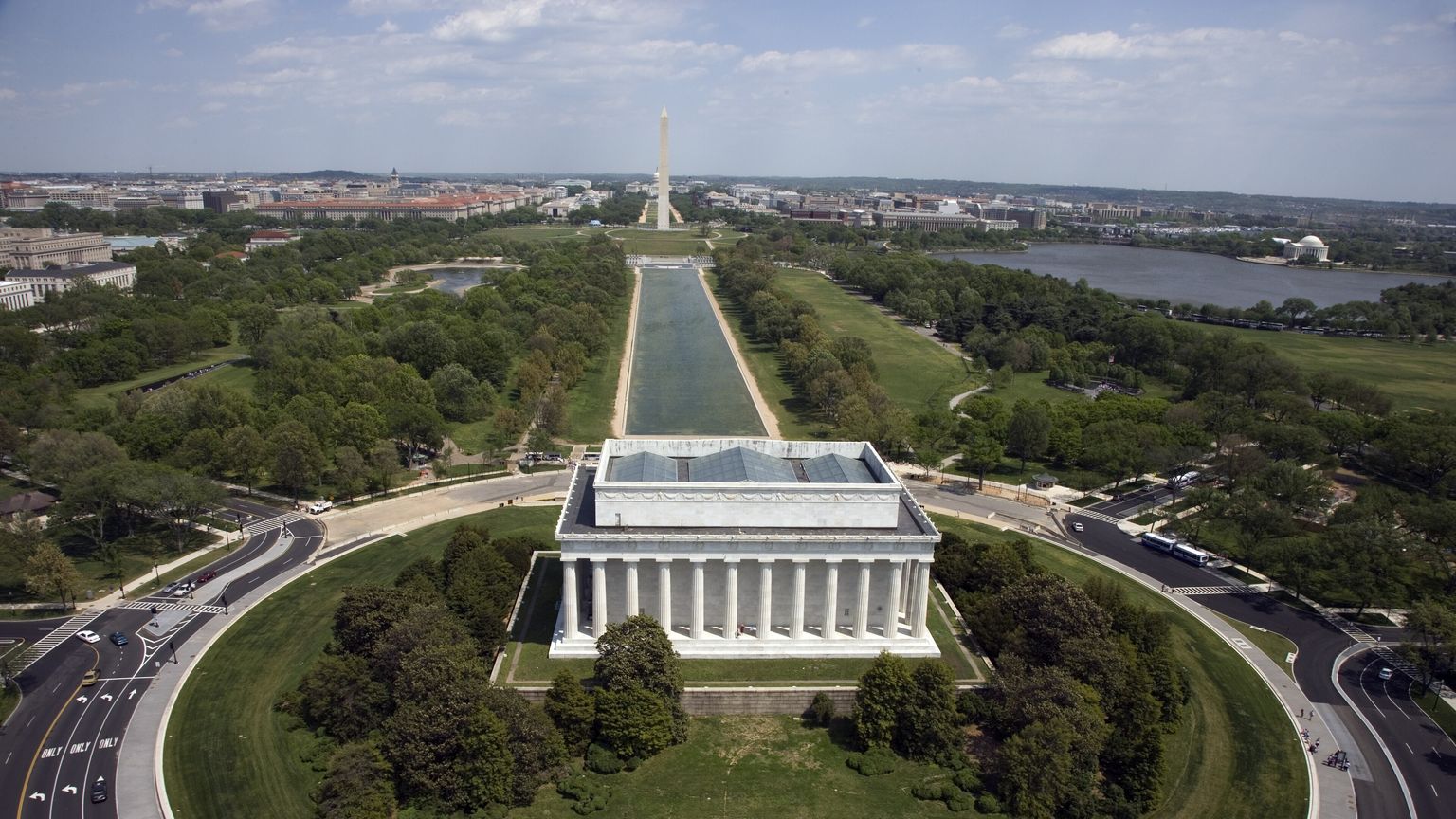
Washington, D.C. is a giant open-air study guide. On one 2-mile strip of grass, the National Mall, you can stand in front of the answers to more than 30 questions on the 2025 civics test. Many people who study for the citizenship interview never get to visit, so this post is the walk without the sore feet.
Start at the Capitol, walk west, and collect the answers. Each stop has the short answer to say at the interview, taken from the official USCIS list of 128 civics questions.
First, the easiest question on the test. Q119. What is the capital of the United States? Washington, D.C. One point before you take a single step.
★ = one of the 20 starred questions for the 65/20 special consideration.
The route at a glance
| Stop | What you see | Questions | Answer to say |
|---|---|---|---|
| 1 | U.S. Capitol | Q18, Q19 | Congress; the Senate and the House |
| 2 | Supreme Court | Q52 ★, Q53 | Supreme Court; 9 seats |
| 3 | National Archives | Q9, Q82, Q6 | Declaration of Independence; Constitution; rights of Americans |
| 4 | Smithsonian museums | Q118, Q123, Q74 ★ | Airplane / moon landing; The Star-Spangled Banner; American Indians |
| 5 | Eisenhower Memorial | Q107 | General during World War II |
| 6 | White House | Q42, Q44 ★ | The President |
| 7 | Washington Monument | Q86 ★ | First president of the United States |
| 8 | World War II Memorial | Q100, Q106 | World War II; Pearl Harbor |
| 9 | Jefferson Memorial | Q78 ★, Q11 | (Thomas) Jefferson; Declaration of Independence |
| 10 | FDR and MLK memorials | Q105, Q113 ★ | (Franklin) Roosevelt; fought for civil rights |
| 11 | Korean War and Vietnam memorials | Q110, Q111 | To stop the spread of communism |
| 12 | Lincoln Memorial | Q94 ★, Q112 | Saved (preserved) the Union; fought to end racial discrimination |
Stop 1: The U.S. Capitol (Congress)
The white dome at the east end of the Mall is where Congress works. That covers a whole cluster of questions:
- Q18. What part of the federal government writes laws? (U.S.) Congress.
- Q19. What are the two parts of Congress? The Senate and the House (of Representatives). The Senate meets in the north wing and the House in the south wing.
- Q21 / Q24. How many senators? 100. How many voting members in the House? 435. More in The Numbers on the 2025 Civics Test.
Fun fact: Washington, D.C. has no U.S. senators and only a nonvoting delegate in the House. That is why the official answers for Q23 and Q29 have special notes for D.C. residents. Everyone else names their own state’s senators and their own representative (find yours here).
Stop 2: The Supreme Court
Right behind the Capitol is a marble building with the words “Equal Justice Under Law” over the door.
- Q52. What is the highest court in the United States? Supreme Court. ★
- Q53. How many seats are on the Supreme Court? Nine (9).
- Q55. How long do justices serve? (For) life.
Deeper dive: The Supreme Court on the 2025 Civics Test.
Stop 3: The National Archives (the founding documents)
Walk a few blocks west along Constitution Avenue. In the Rotunda of the National Archives, the original Declaration of Independence, Constitution and Bill of Rights are on display (National Archives: America’s Founding Documents).
- Q9. What founding document said the American colonies were free from Britain? Declaration of Independence.
- Q82. What founding document was written in 1787? (U.S.) Constitution.
- Q2. What is the supreme law of the land? (U.S.) Constitution. ★
- Q6. What does the Bill of Rights protect? (The basic) rights of Americans.
Three documents, four answers. Keep the dates straight with Easily Confused Answers: Declaration 1776, Constitution 1787.
Stop 4: The Smithsonian museums on the Mall
Several free Smithsonian museums line both sides of the Mall, and three of them hold real objects from the test:
- National Air and Space Museum: the 1903 Wright Flyer and the Apollo 11 command module Columbia. Q118. Name one American innovation: airplane or landing on the moon. See American Innovations (Q118).
- National Museum of American History: the huge original flag that flew over Fort McHenry in 1814 and inspired Francis Scott Key (Smithsonian: The Star-Spangled Banner). Q123. What is the name of the national anthem? The Star-Spangled Banner.
- National Museum of the American Indian: Q74. Who lived in America before the Europeans arrived? American Indians (or Native Americans). ★ For Q117, pick one tribe from the USCIS list, such as Cherokee or Navajo.
Stop 5: The Eisenhower Memorial
Across Independence Avenue from the Air and Space Museum is the newest memorial on this walk, the Dwight D. Eisenhower Memorial.
- Q107. Dwight Eisenhower is famous for many things. Name one. General during World War II (also: 34th president, president during the Korean War, signed the law that created the Interstate highways). More in World War II, FDR, and Eisenhower.
Stop 6: A look at the White House
From the middle of the Mall, look north toward the White House, home of the president.
- Q42. Who is Commander in Chief of the U.S. military? The President.
- Q44. Who vetoes bills? The President. ★
- Q43 / Q45. Who signs bills? Who appoints federal judges? The President again.
Tip: when a “Who…” question is about the executive branch, “the President” is very often the answer. See How a Bill Becomes a Law (Q41, Q43–Q46). For Q38 and Q39 (the names of the President and Vice President now), always check USCIS test updates close to your interview.
Stop 7: The Washington Monument
The tall white obelisk in the center of the Mall (about 555 feet) honors George Washington (NPS: Washington Monument).
- Q86. George Washington is famous for many things. Name one. First president of the United States (also: “Father of Our Country”, General of the Continental Army, President of the Constitutional Convention). ★
Stop 8: The World War II Memorial
Between the Washington Monument and the Reflecting Pool is a plaza with fountains, 56 pillars and a wall of 4,048 gold stars. Each star honors about 100 Americans who died in the war (NPS: World War II Memorial).
- Q100. Name one war fought by the United States in the 1900s. World War II (also: World War I, Korean War, Vietnam War, Gulf War).
- Q106. Why did the United States enter World War II? (Bombing of) Pearl Harbor.
Stop 9: The Jefferson Memorial
Across the Tidal Basin is a round, domed building. President Franklin Roosevelt dedicated it on April 13, 1943, the 200th anniversary of Jefferson’s birth (NPS: Thomas Jefferson Memorial). Words from the Declaration of Independence are carved on its walls.
- Q78. Who wrote the Declaration of Independence? (Thomas) Jefferson. ★
- Q11. “Life, Liberty, and the pursuit of Happiness” are in what founding document? Declaration of Independence.
- Q87. Name one thing Jefferson is famous for: writer of the Declaration of Independence or third president of the United States.
Stop 10: The FDR and Martin Luther King Jr. memorials
Keep walking around the Tidal Basin:
- The Franklin Delano Roosevelt Memorial has four outdoor “rooms”, one for each of his terms. Q105. Who was president during the Great Depression and World War II? (Franklin) Roosevelt.
- The Martin Luther King, Jr. Memorial shows Dr. King carved in granite. Q113. Name one thing he is famous for: fought for civil rights or worked for equality for all Americans. ★
Both have their own posts: The Great Depression (Q103–Q105) and MLK and the Civil Rights Movement.
Stop 11: The Korean War and Vietnam Veterans memorials
On each side of the Reflecting Pool, two memorials honor the wars of the Cold War era: the Korean War Veterans Memorial, with 19 steel soldiers walking through juniper bushes, and the black granite wall of the Vietnam Veterans Memorial.
- Q110 and Q111. Why did the United States enter the Korean War? The Vietnam War? Same answer for both: to stop the spread of communism. Two questions, one answer. See Cold War and Communism.
Stop 12: The Lincoln Memorial (the finish line)
The walk ends at the west end of the Mall, at the giant seated statue of Abraham Lincoln (NPS: Lincoln Memorial). The Gettysburg Address is carved on the wall inside. On the steps outside, Dr. King gave his “I Have a Dream” speech during the March on Washington in 1963.
- Q94. Abraham Lincoln is famous for many things. Name one. Saved (preserved) the Union (also: freed the slaves, led the U.S. during the Civil War, 16th president, delivered the Gettysburg Address). ★
- Q112. What did the civil rights movement do? Fought to end racial discrimination.
Quick self-check: 10 questions from the walk
Say each answer out loud before you open the key. That is how the real test works: the officer asks, and you answer by speaking.
- What is the capital of the United States?
- What part of the federal government writes laws?
- How many seats are on the Supreme Court?
- What founding document was written in 1787?
- Name one American innovation you can see at the Air and Space Museum.
- Who vetoes bills?
- Who wrote the Declaration of Independence?
- Why did the United States enter World War II?
- Why did the United States enter the Vietnam War?
- Name one thing Abraham Lincoln is famous for.
- Washington, D.C. (Q119)
- (U.S.) Congress (Q18)
- Nine (9) (Q53)
- (U.S.) Constitution (Q82)
- Airplane or landing on the moon (Q118)
- The President (Q44)
- (Thomas) Jefferson (Q78)
- (Bombing of) Pearl Harbor (Q106)
- To stop the spread of communism (Q111)
- Saved (preserved) the Union, or another answer from the list (Q94)
9 or 10 right? Great memory for monuments. Under 7? Walk the table above once more tomorrow.
Make the walk part of your study
- Visiting D.C.? Take a selfie at each stop and say the answer out loud. You’ll remember the place, and the place will remind you of the answer.
- Not visiting? Open a map of the National Mall and “walk” it in 10 minutes, saying one answer per stop.
- Then test yourself for real: take a scored 2025 practice test (20 questions, 12 to pass, or the 65/20 version) or play today’s 10 questions in Listen.
Read next
- Virginia on the 2025 Civics Test: From Jamestown to the Pentagon
- Where Is the Statue of Liberty? Civics Test Q120
- Three Branches of Government on the 2025 Civics Test
Sources: USCIS: 2025 Civics Test, 128 Questions and Answers (PDF); USCIS: Check for Test Updates; NPS: National Mall and Memorial Parks; NPS: World War II Memorial; NPS: Thomas Jefferson Memorial; NPS: Lincoln Memorial; National Archives: America’s Founding Documents; Smithsonian National Air and Space Museum; Smithsonian: The Star-Spangled Banner. Photo: Carol M. Highsmith, Library of Congress, via Wikimedia Commons (public domain).
This post is general study information, not legal advice. CitizenExams is an independent study site and is not affiliated with USCIS.