Your N-400 Biometrics Appointment: What to Bring, What Happens, How to Reschedule
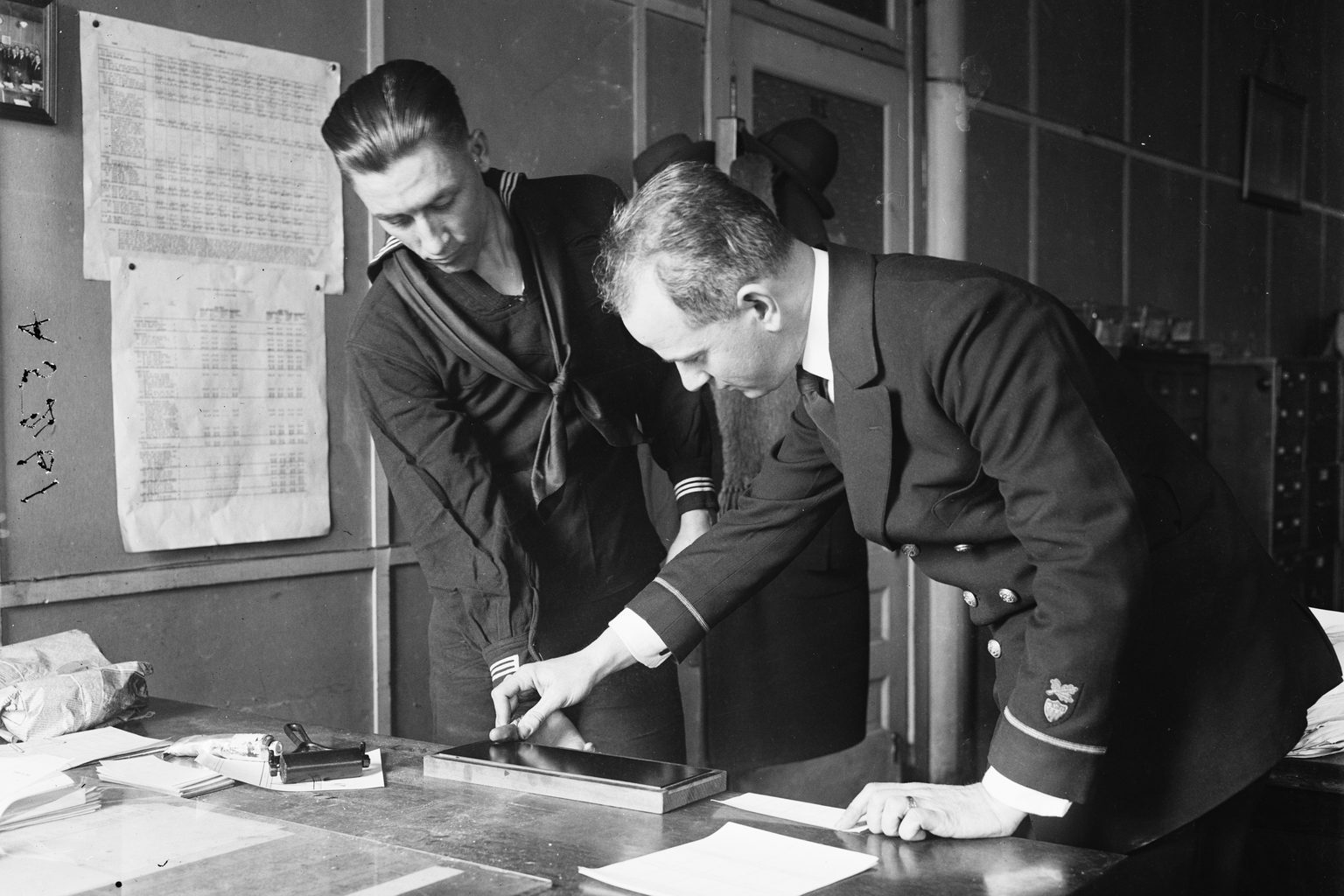
After you file Form N-400, one of the first letters many applicants get is not an interview notice. It is a biometrics appointment notice. Fingerprinting has changed a lot since the 1923 photo above, when a clerk rolled each finger on an ink plate, but the purpose is the same: to confirm who you are and run background checks.
Here is what USCIS says about this appointment, and what to do with the weeks after it.
What the appointment is for
If USCIS needs your fingerprints, photograph, or signature, it schedules a biometric services appointment at a local Application Support Center (ASC). USCIS says the biometrics you give there let it confirm your identity and run the required background and security checks (Preparing for Your Biometric Services Appointment).
The notice comes as Form I-797C, Notice of Action, and lists the date, time, and location of your ASC appointment.
The ASC visit is not your interview. There is no civics or English test there. Those come later, at your naturalization interview.
What to bring
USCIS says your notice will give specific instructions, and that you must also bring:
- Your ASC appointment notice (Form I-797C). If you got more than one biometrics notice, bring all of them.
- Valid photo identification, such as your Green Card, passport, or driver’s license.
A few more points from the same USCIS page:
- Your attorney or accredited representative does not need to come with you, even if they filed your application.
- No weapons at any USCIS facility, including firearms, knives, pepper spray, and ammunition, even with a permit. Check your bag before you leave.
- If you don’t understand spoken English, you should bring someone who can translate, such as a family member, attorney, or accredited representative. USCIS also posts the ASC instructions in several languages on that page.
What happens at the ASC
You give your biometrics on machines built for it. You also sign digitally. USCIS says that by signing you attest, under penalty of perjury, that the information in your application and the documents you filed with it were complete, true, and correct when you filed. So it’s worth rereading your copy of the N-400 before you go.
ASC staff can’t change your name or other personal details at the appointment. The notice is generated from what you put on your application. If something needs correcting, USCIS points you to its normal processes (for example, changing your address).
Rescheduling: the rules changed
This is the part that catches people. According to USCIS:
- You must request a reschedule through your USCIS online account. Do not mail the request.
- You must ask before the original date and time, and show good cause.
- Online requests must be made at least 12 hours before the appointment. If it’s less than 12 hours away, or you already missed it, call the USCIS Contact Center at 800-375-5283 (TTY 800-767-1833).
- Want a different ASC? You must reschedule in advance and pick the new location. If you just show up at a different ASC, USCIS says your appointment will not be processed.
- If you miss the appointment without rescheduling, or without good cause, USCIS may treat your application as abandoned and deny it.
If you’re sick, USCIS asks you not to come and to reschedule (If You Feel Sick). If you have a disability, you can request an accommodation through the disability accommodations page or the Contact Center. If a serious medical condition keeps you at home or in a hospital, your notice explains how to ask for a homebound appointment.
To find your nearest ASC, use the USCIS Service and Office Locator.
A simple checklist for the day
- Reread the notice: date, time, and the exact ASC address.
- Pack the I-797C notice(s) and your photo ID (Green Card for most N-400 applicants).
- Leave anything that counts as a weapon at home.
- Skim your N-400 copy, since you’ll be attesting to it.
- Bring a translator if you need one.
Use the wait: start the civics test now
Biometrics usually means your case is moving. The interview, where you take the English and civics tests, comes later. If you filed on or after October 20, 2025, you’ll take the 2025 civics test: up to 20 questions from a bank of 128, and you need 12 correct (Which Civics Test Am I Taking?).
The time between biometrics and the interview is a good stretch to build a short daily habit:
- Take one free practice test (a fresh random 20 each time). Misses go into your review deck on this device.
- Try the mock civics interview out loud with a family member.
- Practice the English reading and writing test with the official USCIS vocabulary.
- Look up the answers that depend on where you live (your senators, representative, governor) on My Officials.
- Follow the 10–15 minute daily schedule so all 128 get covered before your interview.
Read next
- What to Bring to Your Naturalization Interview (Document Checklist)
- Naturalization Interview Day: What to Expect
- After the Civics Test: Approved, Continued or Denied?
Sources: USCIS, Preparing for Your Biometric Services Appointment (last reviewed 04/30/2026), and Form I-797C, Notice of Action. Rules can change, so always follow your own notice and check USCIS before your appointment. Photo: Harris & Ewing collection, Library of Congress.
This post summarizes public USCIS information for general education. It is not legal advice. For questions about your own case, contact USCIS or a qualified immigration attorney or accredited representative.