Your Naturalization Oath Ceremony: Form N-445, Your Green Card, and What Happens That Day
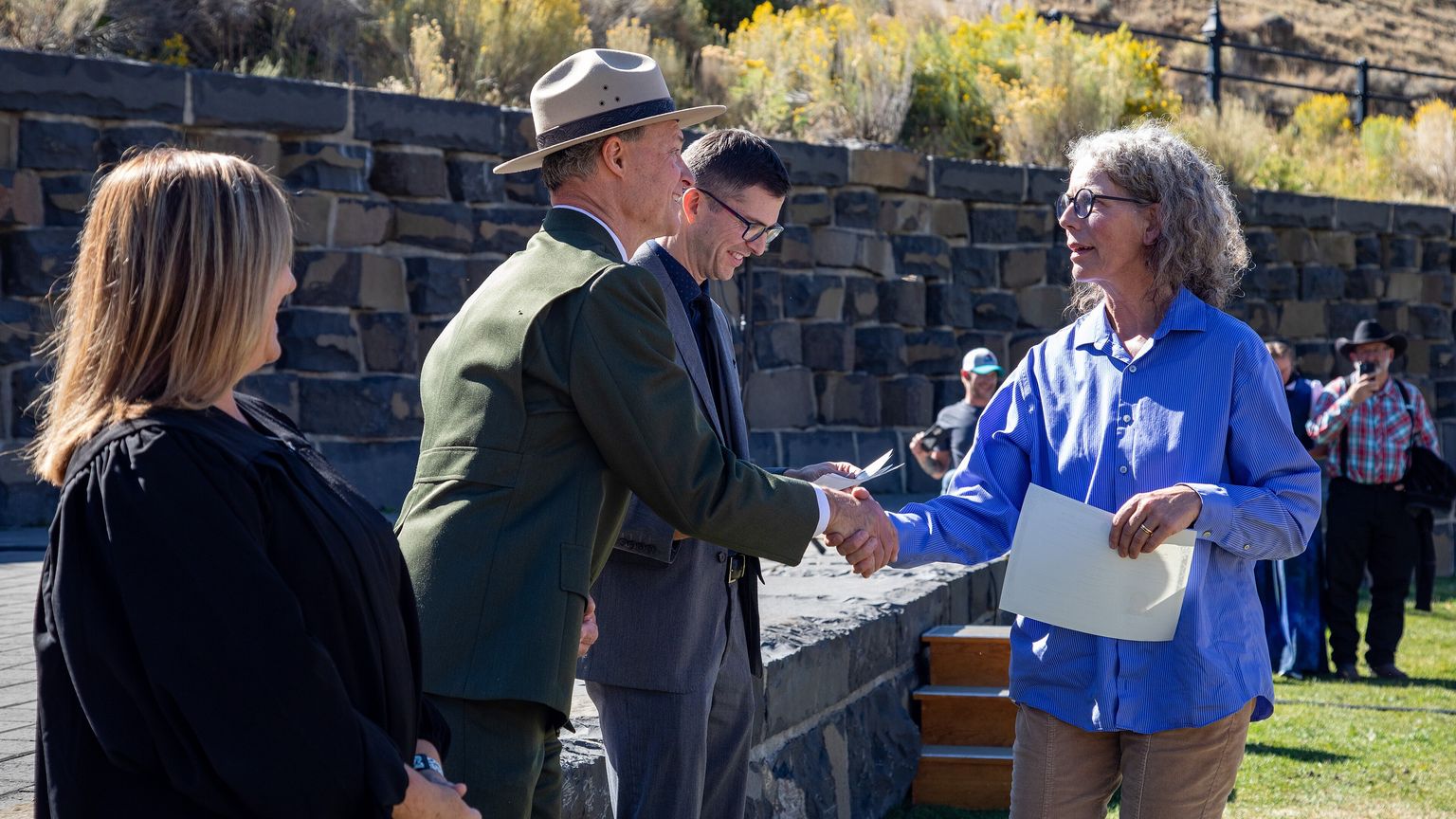
You passed the interview. The officer approved your N-400. There is one step left, and it is the one that actually makes you a citizen: the Oath of Allegiance. USCIS says it plainly on its ceremonies page: “You are not a U.S. citizen until you take the Oath of Allegiance at a naturalization ceremony.”
Here is what happens between approval and the moment you hold your certificate, and what to have ready.
Same day, or a notice in the mail
Some USCIS offices hold ceremonies on the same day as the interview. If that’s not available, USCIS sends you Form N-445, Notice of Naturalization Oath Ceremony, with the date, time and place. If you filed your N-400 online, the notice also appears in your online account (10 Steps to Naturalization, steps 8 and 9).
There are two kinds of ceremonies:
- Administrative ceremony: USCIS gives the oath.
- Judicial ceremony: a court gives the oath. If you asked to legally change your name on your N-400, you will usually be scheduled for a judicial ceremony, because a court has to approve the name change.
Your notice may come with extra instructions from your local office (parking, arrival time, guests). Read them closely.
The N-445 questionnaire: answer it on ceremony day
The back of Form N-445 has a short questionnaire. The instructions say to answer it on the day of the ceremony, before you go, and that the questions are only about the time since your interview, not your whole life. Questions like:
- Have you married, divorced or become widowed since your interview?
- Have you traveled outside the United States?
- Have you been arrested, cited or charged with breaking any law?
If you answer “Yes” to anything, bring documents that explain it: a marriage certificate or divorce decree, travel records, arrest records and court papers, or military discharge papers. At check-in, an officer reviews your answers and confirms you are still eligible before you take the oath (Policy Manual, Vol. 12, Part J, Ch. 5).
Answer honestly. The officer has your file, and a “Yes” with documents is much better than a surprise. If something serious happened after approval, USCIS can hold the oath and reopen the case (Part J, Ch. 4). If that applies to you, talk to an immigration attorney or accredited representative before the ceremony.
What to bring
Per the N-445 notice and the USCIS ceremonies page:
- Your N-445 notice with the questionnaire completed and signed
- Every Permanent Resident Card (green card) you have, valid or expired
- Any reentry permits or refugee travel documents, valid or expired
- Any other documents USCIS issued you, such as an employment authorization card
- Documents for any “Yes” answer on the questionnaire
- A government photo ID is a good idea for getting into a federal building
Ceremonies are often held in federal buildings, so check the Federal Protective Service FAQ on prohibited items before you pack a bag. USCIS asks you to dress appropriately for a solemn event. Many people dress as they would for a family celebration.
You hand in your green card
At check-in you give your green card back to USCIS. You won’t need it, because you leave with a Certificate of Naturalization. The ceremonies page says this requirement is waived only if you showed at the interview that the card was lost and you tried to recover it, or if you never had permanent residence because of your military service.
One practical point: from check-in until you receive your certificate, you have neither document in hand. Don’t book a flight for the same day. Give yourself time to apply for your first U.S. passport before any trip abroad.
What the ceremony looks like
USCIS administrative ceremonies follow a standard program, “to the extent feasible” (Part J, Ch. 5):
- The short video “Faces of America”
- The national anthem, “The Star-Spangled Banner”
- Welcoming remarks
- The “call of countries”: when your country of origin is called, you stand
- The Oath of Allegiance
- Keynote remarks from USCIS leadership or a guest speaker
- A recorded congratulatory message
- The Pledge of Allegiance, recited together, now as citizens
- Closing remarks
- Presentation of your Certificate of Naturalization (Form N-550)
You don’t have to memorize the oath. You’ll have the words in front of you and repeat after the officer. The oath is given in English, and you may bring an interpreter to help you understand it (Part J, Ch. 2). If you prefer to say “solemnly affirm” instead of “on oath,” and to leave out “so help me God,” you can do that just by asking. See Oath of Allegiance options.
USCIS also notes that when music plays, people becoming citizens are not required to stand or sing.
Many ceremonies have room for family and friends, but your notice or local office instructions will say whether guests can come and how many. Plan to take photos with your new certificate afterward.
Check your certificate before you leave
This step is easy to skip in the excitement, but it matters. USCIS tells you to review your Certificate of Naturalization carefully and tell USCIS about any errors before you leave the ceremony. Check:
- Spelling of your name (including any new name)
- Date of birth
- Country of former nationality
- Gender and marital status
- Your photo
Fixing a typo at the ceremony is quick. Fixing it later means filing Form N-565. Your certificate is official proof of citizenship. Keep the original flat and safe, avoid laminating it, and make a copy for your records.
Can’t make it? Reschedule the right way
If you can’t attend, return the N-445 to your local USCIS office with a letter explaining why and asking for a new date. USCIS will schedule you for a later ceremony.
Don’t just stay home. Under the Policy Manual (Part J, Ch. 4), if you miss two ceremonies without good cause, USCIS treats it as abandoning your application. It files a motion to reopen, and you have 15 days to respond or the application may be denied.
Right after the ceremony
You’ll usually get a Citizenship Welcome Packet. It includes an application for a U.S. passport, and at many ceremonies you can pick up a voter registration application too (more on voter registration at ceremonies). Then:
- Passport: apply with Form DS-11 and your original certificate. See your first U.S. passport after the oath.
- Social Security: USCIS says to wait at least 10 days, then update your record. See how to update Social Security.
- Your children: children under 18 with green cards who live with you may become citizens automatically. See the Child Citizenship Act and Form N-600.
- Voting: you can register as soon as you are a citizen, and not a day before. If you registered or voted while you were a permanent resident, read this first.
Three civics answers you’ll hear live
The ceremony is a nice review of the test you just passed:
Q123. What is the name of the national anthem? The Star-Spangled Banner
Q67. Name two promises that new citizens make in the Oath of Allegiance. Give up loyalty to other countries · Defend the (U.S.) Constitution · Obey the laws of the United States · Serve in the military (if needed) · Serve (help, do important work for) the nation (if needed) · Be loyal to the United States
Q66. What do we show loyalty to when we say the Pledge of Allegiance? The United States · The flag
Still waiting for your interview? Use the countdown to practice: a free 20-question practice test, hands-free Listen mode, or a mock civics interview.
Read next
- After the Civics Test: Approved, Continued or Denied?
- Oath of Allegiance Promises on the 2025 Civics Test
- Can You Say “Affirm” Instead of “So Help Me God”?
Sources: USCIS, Naturalization Ceremonies (updated 02/12/2026), 10 Steps to Naturalization, Naturalization Oath of Allegiance, Form N-445, Notice of Naturalization Oath Ceremony (instructions), and Policy Manual Vol. 12, Part J, Ch. 2, Ch. 3, Ch. 4 and Ch. 5. Civics answers from the USCIS 2025 civics test, 128 questions and answers. Photo: NPS / Ashton Hooker, Yellowstone National Park, via Wikimedia Commons (public domain).
This post summarizes public government information for general education. Local ceremony details vary, so follow the instructions on your own notice. It is not legal advice, and CitizenExams is not affiliated with USCIS.