What Is the Supreme Law of the Land? Civics Q2 and the Supremacy Clause in Plain English
“What is the supreme law of the land?” is Q2 on the 2025 civics test, and it has one of the shortest answers on the whole list: the Constitution. This post explains what “supreme law” means, where the Constitution says it, and how this one fact helps you answer several other questions.
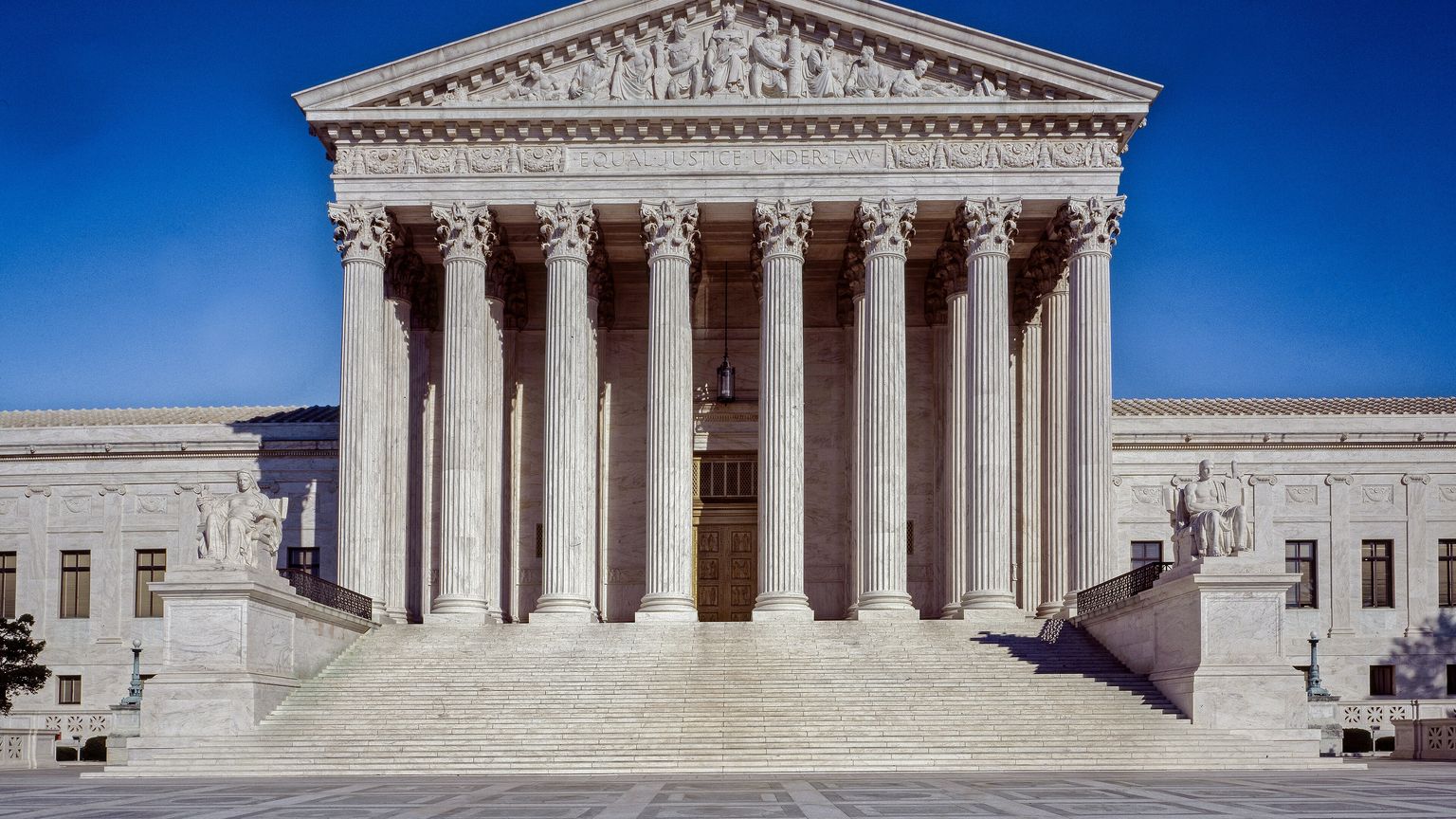
The photo shows the U.S. Supreme Court building in Washington, D.C. The Supreme Court can decide that a law goes against the Constitution. That power is one big reason the Constitution really is “supreme.”
The answer USCIS accepts
The USCIS list of 128 questions (PDF) gives one answer for Q2:
- "(U.S.) Constitution"
The words in parentheses are optional. “The Constitution” is enough.
Q2 has an asterisk. That means it is one of the 20 questions for applicants who qualify for the 65/20 special consideration (65 or older, and a green card holder for at least 20 years). See age exemptions: 65/20, 50/20 and 55/15.
On the older 2008 test (for people who filed before October 20, 2025), this is Question 1, with the same answer: “the Constitution.” Not sure which test you’ll get? See 2008 vs 2025: which civics test.
What “supreme law of the land” means
| Words | Plain English |
|---|---|
| Supreme | Highest. Nothing is above it. |
| Law | A rule that everyone must follow. |
| Of the land | For the whole country: every state, every city, every government office. |
So “the supreme law of the land” means the highest law in the United States. Every other law (from Congress, a state, a county or a city) must agree with the Constitution. If a law goes against the Constitution, the Constitution wins.
Where the Constitution says it: Article VI
The Constitution calls itself supreme. Article VI, clause 2, often called the Supremacy Clause, says (National Archives transcript):
“This Constitution, and the Laws of the United States which shall be made in Pursuance thereof; and all Treaties made, or which shall be made, under the Authority of the United States, shall be the supreme Law of the Land; and the Judges in every State shall be bound thereby, any Thing in the Constitution or Laws of any State to the Contrary notwithstanding.”
| Words | Plain English |
|---|---|
| This Constitution | The Constitution itself. This is the Q2 answer. |
| Laws of the United States made in Pursuance thereof | Federal laws that Congress makes following the Constitution. |
| all Treaties | Agreements the United States makes with other countries. |
| the Judges in every State shall be bound thereby | State judges must follow it too. |
| any Thing in the Constitution or Laws of any State to the Contrary notwithstanding | If a state law or even a state constitution says something different, the U.S. Constitution still controls. |
Notice the order: federal laws count only if they are made “in pursuance” of the Constitution. That is why the test answer is the Constitution, not “federal law.”
The next clause of Article VI adds that members of Congress, state lawmakers, and executive and judicial officers “shall be bound by Oath or Affirmation, to support this Constitution.”
Who checks that laws follow the Constitution?
Courts do. In Marbury v. Madison (1803), the Supreme Court, led by Chief Justice John Marshall, said: “It is emphatically the province and duty of the judicial department to say what the law is.” The National Archives explains that this case established the right of the courts to decide whether actions of the other two branches follow the Constitution (National Archives, Marbury v. Madison). This idea is called judicial review.
You don’t need the case name for the test. But it helps with Q51, “What does the judicial branch do?” One answer USCIS accepts is: “Decides if a law goes against the (U.S.) Constitution.” For more, see The Supreme Court on the 2025 Civics Test.
Everyone promises to support it, including new citizens
Because the Constitution is the supreme law, the most important promises in American government are promises to it:
- The President swears to “preserve, protect and defend the Constitution of the United States” (Article II).
- Members of Congress, state officials and judges swear or affirm “to support this Constitution” (Article VI).
- New citizens promise in the Oath of Allegiance to “support and defend the Constitution and laws of the United States of America against all enemies, foreign and domestic” (USCIS, Naturalization Oath of Allegiance).
That last one is on the test too: Q67 asks for two promises in the Oath of Allegiance, and “Defend the (U.S.) Constitution” is an accepted answer. See Oath of Allegiance promises.
One answer, several questions
| Question | How Q2 helps |
|---|---|
| Q1 What is the form of government? | Republic / constitution-based federal republic. The Constitution sets up the government. |
| Q3 Name one thing the Constitution does | Forms the government, defines powers of government, protects the rights of the people. |
| Q13 What is the rule of law? | No one is above the law. Even the government must follow the supreme law. |
| Q51 What does the judicial branch do? | Decides if a law goes against the (U.S.) Constitution. |
| Q67 Two promises in the Oath of Allegiance | Defend the (U.S.) Constitution, obey the laws of the United States. |
Common wrong answers
- “The Declaration of Independence.” It is a founding document, but it is not a law that runs the government. It said the colonies were free from Britain (Q9).
- “The Bill of Rights.” The first ten amendments are part of the Constitution. Say the whole thing: the Constitution.
- “The Supreme Court.” That’s the highest court (Q52), not the highest law.
- “Federal law” or “Congress.” Federal laws must follow the Constitution, so they are not the top.
- “The President.” No person is the supreme law. That’s the idea of the rule of law.
Say it out loud
The officer reads the question and you answer out loud. A short, clear answer is best:
“The Constitution.”
If you want to add one sentence: “It is the highest law in the United States.” That’s all you need. For more speaking practice, try practicing civics out loud.
Quick self-check
- What is the supreme law of the land?
- Which article of the Constitution has the Supremacy Clause?
- If a state law goes against the U.S. Constitution, which one wins?
- Name one thing the judicial branch does (Q51) that connects to Q2.
- Name one promise in the Oath of Allegiance that mentions the Constitution.
- The (U.S.) Constitution.
- Article VI (clause 2).
- The U.S. Constitution.
- It decides if a law goes against the (U.S.) Constitution.
- Defend the (U.S.) Constitution (the oath says “support and defend the Constitution and laws of the United States of America”).
Practice Q2 with the rest of the Principles of American Government questions in the practice test, or listen to them on the go with Listen.
Read next
- What Does “We the People” Mean? Civics Q4 and the Preamble in Plain English
- What Does the Constitution Do? Civics Q3 and the 7 Articles in Plain English
- Republic or Democracy? Civics Q1, the Form of U.S. Government, in Plain English
- Checks and Balances, Explained: Who Checks Whom on the 2025 Civics Test (Q15)
- Federal vs. State Powers on the 2025 Civics Test
Sources: USCIS, 2025 Civics Test, 128 Questions and Answers (PDF) (Q1, Q2 with asterisk, Q3, Q9, Q13, Q51, Q52, Q67); USCIS, 2008 Civics Test, 100 Questions (PDF) (Q1, “the Constitution”); USCIS Policy Manual, Vol. 12, Part E, Ch. 2, English and Civics Testing (2008 vs 2025 test by filing date); National Archives, The Constitution of the United States: A Transcription (Article II presidential oath, Article VI Supremacy Clause and oath clause); National Archives, Marbury v. Madison (1803) (judicial review, “province and duty of the judicial department to say what the law is”); National Constitution Center, Interactive Constitution: Article VI; USCIS, Naturalization Oath of Allegiance to the United States of America. Photo: Carol M. Highsmith, Library of Congress, via Wikimedia Commons (public domain).
This post is general study information, not legal advice. CitizenExams is an independent study site and is not affiliated with USCIS.