What Is the Purpose of the 10th Amendment? Civics Q60 in Plain English
“What is the purpose of the 10th Amendment?” is Q60 on the 2025 civics test. The answer is one sentence: "(It states that the) powers not given to the federal government belong to the states or to the people."
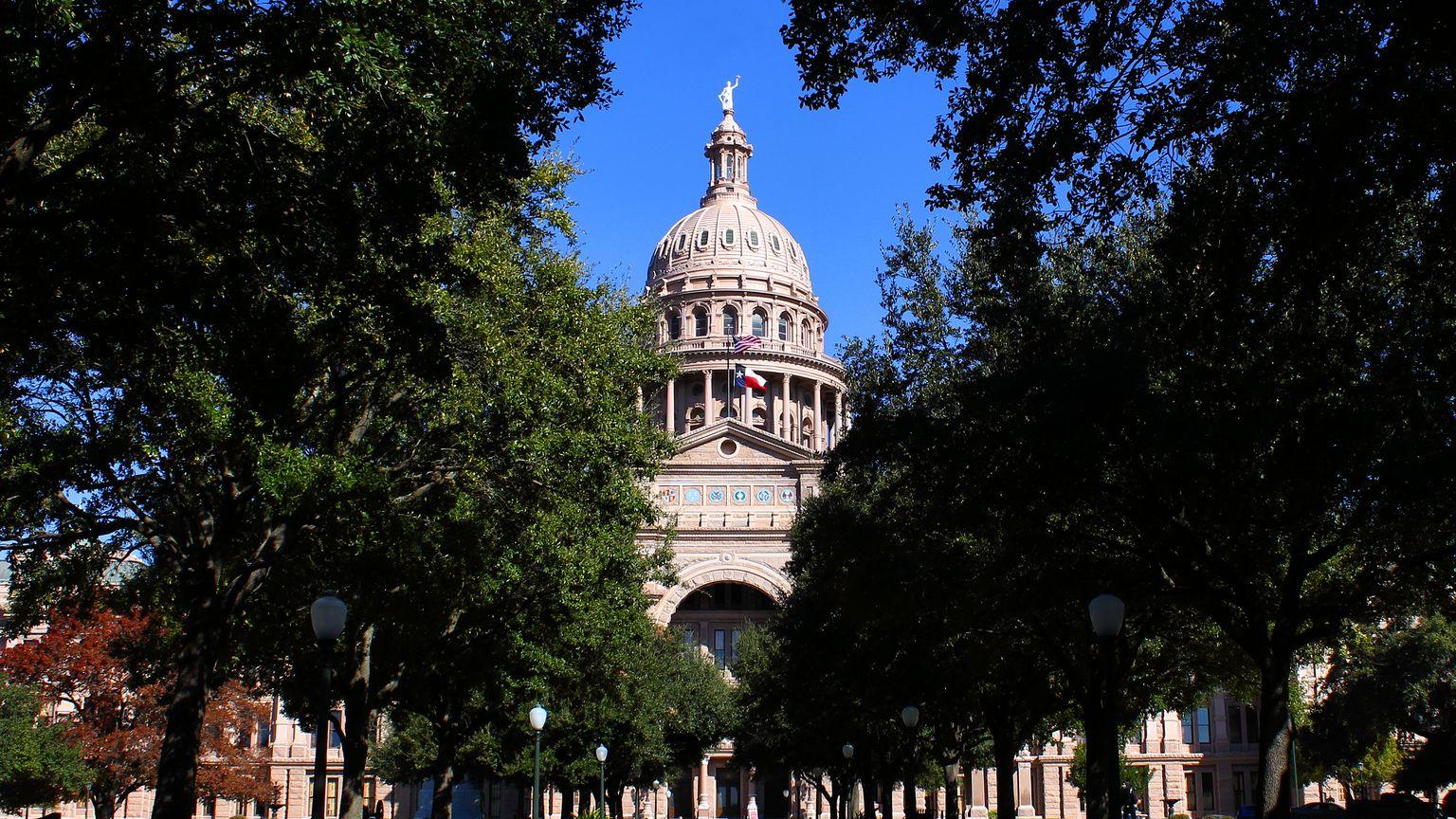
The photo shows the Texas State Capitol in Austin, where the Texas Legislature meets. Every state has a capitol like this one, and a lot of the government you deal with every day (schools, police, driver’s licenses) is run from buildings like it, not from Washington, D.C. The 10th Amendment is the short line in the Constitution that explains why.
The answer USCIS accepts
The USCIS list of 128 questions (PDF) gives one answer for Q60:
- "(It states that the) powers not given to the federal government belong to the states or to the people."
The words in parentheses are optional. “Powers not given to the federal government belong to the states or to the people” is enough.
Q60 does not have an asterisk, so it is not one of the 20 questions for the 65/20 test. It is also new: the 2008 test (for people who filed Form N-400 before October 20, 2025) asked for a federal power and a state power, but it never asked about the 10th Amendment. Not sure which test you’ll get? See 2008 vs 2025: which civics test.
You don’t have to repeat the words exactly. USCIS says an applicant passes a question with “a correct answer or… an alternative phrasing of the correct answer” (USCIS Policy Manual, Vol. 12, Part E, Ch. 2). “If the Constitution doesn’t give a power to the federal government, the states or the people keep it” says the same thing. Still, the USCIS wording is the safest thing to practice.
What it means in everyday words
Think of the Constitution as a list of jobs the people handed to the national government: make money, run the army, deal with other countries, and so on. The 10th Amendment adds a rule about everything not on the list:
- On the list (given to the federal government) → the federal government can do it
- Not on the list → the power stays with the states or with the people
That is the whole idea. The federal government has limited powers. The rest are “reserved” (kept back) for the states and the people. This split between the national government and the state governments is called federalism.
Memory trick: 10th = left over. Whatever the Constitution didn’t give to Washington is left over for the states and the people.
The full text (one sentence)
Here is the 10th Amendment, word for word (National Archives, Bill of Rights transcript):
“The powers not delegated to the United States by the Constitution, nor prohibited by it to the States, are reserved to the States respectively, or to the people.”
Word by word:
| Constitution’s words | Plain English |
|---|---|
| powers not delegated to the United States | powers not given to the federal government |
| nor prohibited by it to the States | and not forbidden to the states |
| are reserved to the States respectively | belong to each state |
| or to the people | or to the people themselves |
The USCIS answer simply leaves out the middle part. That part matters, though: some powers are taken away from the states on purpose. Article I, Section 10 of the Constitution says, for example, that “No State shall enter into any Treaty” or “coin Money” (National Archives, Constitution transcript). Those powers are not “left over” for the states. They belong only to the national government, which is exactly what Q58 asks about.
How Q60 connects to Q58 and Q59
Q58, Q59 and Q60 sit together on the test and tell one story. Learn them as a set:
| Question | Short answer to say | Why it fits |
|---|---|---|
| Q58 Name one power that is only for the federal government. | Print paper money (also: mint coins, declare war, create an army, make treaties, set foreign policy) | These are given to the national government (Article I, Section 8 lists coining money, declaring war and raising armies) and several are forbidden to the states |
| Q59 Name one power that is only for the states. | Give a driver’s license (also: provide schooling and education, provide protection (police), provide safety (fire departments), approve zoning and land use) | These are not on the federal list, so they are left over for the states |
| Q60 What is the purpose of the 10th Amendment? | Powers not given to the federal government belong to the states or to the people | This is the rule that explains Q58 and Q59 |
Look at the Q59 answers again: schools, police, fire departments, driver’s licenses, zoning. That’s the 10th Amendment at work in daily life. When you get a driver’s license, you go to a state office, not a federal one.
For more practice with this block, see Federal vs. State Powers on the 2025 Civics Test.
Why the 10th Amendment was added
The original Constitution of 1787 had no bill of rights. Supporters of the Constitution argued one wasn’t needed, because the new national government would only have the powers the Constitution listed. Opponents worried the new government would grab more. Several states agreed to the Constitution expecting amendments to be added quickly (Constitution Annotated, Historical Background on the Tenth Amendment).
So the First Congress proposed amendments, and ten were ratified on December 15, 1791. These are the Bill of Rights (Q6), and the 10th Amendment is the last of them. The first nine mostly protect rights of people. The 10th puts in writing the promise that the national government has only the powers it was given (Constitution Annotated).
James Madison, the “Father of the Constitution” (Q88), introduced the proposals in the House of Representatives in June 1789.
The famous missing word: “expressly”
Before the Constitution, the states were joined under the Articles of Confederation. Article II of the Articles said each state kept every power “not by this confederation expressly delegated” to the national government (Constitution Annotated).
When the House debated the 10th Amendment in August 1789, some members tried to add that same word, “expressly.” Madison objected that “it was impossible to confine a Government to the exercise of express powers”; a government also needs powers that come with the listed ones. The House voted the change down, 17 to 32 (House debate, August 18, 1789, in The Founders’ Constitution). In the same debate, the words “or to the people” were added at the end.
You won’t be asked about this on the test. It is just a good way to remember that the 10th Amendment says powers “not delegated,” not powers “not expressly delegated.”
Common wrong answers
| If you say… | The problem |
|---|---|
| “Freedom of speech” | That’s the 1st Amendment (see the five freedoms). The 10th is about powers, not a personal freedom |
| “It gives all power to the states” | No. Powers given to the federal government stay federal. Only the leftover powers belong to the states or the people |
| “Powers belong to the President” | The 10th Amendment is about the federal government vs. the states, not about one branch |
| “It ended slavery” / “Women can vote” | Those are the 13th and 19th Amendments |
| “It’s the last amendment” | The Constitution has 27 amendments (Q7). The 10th is the last amendment in the Bill of Rights |
If you’re unsure under pressure, just start with “Powers not given to the federal government…” and finish with "…belong to the states or to the people."
Quick self-check
- What is the purpose of the 10th Amendment?
- Name one power that is only for the states.
- Name one power that is only for the federal government.
- The 10th Amendment is the last amendment of which group?
- “Reserved” means what in plain words?
- Powers not given to the federal government belong to the states or to the people.
- Give a driver’s license (or schooling and education, police, fire departments, zoning and land use).
- Print paper money (or mint coins, declare war, create an army, make treaties, set foreign policy).
- The Bill of Rights (the first ten amendments).
- Kept back for someone, here for the states and the people.
Practice Q58 to Q60 with the rest of the American Government questions in the practice test, or listen to them with audio.
Read next
- Federal vs. State Powers on the 2025 Civics Test
- What the Bill of Rights Protects
- Every Amendment on the 2025 Civics Test, by Number
- Checks and Balances, Explained: Who Checks Whom (Q15)
- Thomas Jefferson, James Madison, and Alexander Hamilton on the 2025 Civics Test (Q87–Q89)
Sources: USCIS, 2025 Civics Test, 128 Questions and Answers (PDF) (Q6, Q7, Q58–Q60, Q88; Q58–Q60 not starred); USCIS, 2008 Civics Test, 100 Questions (PDF) (Q41 federal power, Q42 state power; no 10th Amendment question); USCIS Policy Manual, Vol. 12, Part E, Ch. 2, English and Civics Testing (2008 vs 2025 test by filing date; alternative phrasing of a correct answer); National Archives, The Bill of Rights: A Transcription (Amendment X); National Archives, The Constitution of the United States: A Transcription (Article I, Sections 8 and 10); Congress.gov, Constitution Annotated, Historical Background on Tenth Amendment (purpose within the Bill of Rights; Articles of Confederation Art. II “expressly delegated”); House of Representatives debate, August 18, 1789, The Founders’ Constitution, University of Chicago Press (Madison on express powers; “expressly” rejected 17–32; “or to the people” added). Photo: Larry D. Moore, via Wikimedia Commons (CC BY 4.0).
This post is general study information, not legal advice. CitizenExams is an independent study site and is not affiliated with USCIS.