Thirteen Original States on the 2025 Civics Test (Q81)
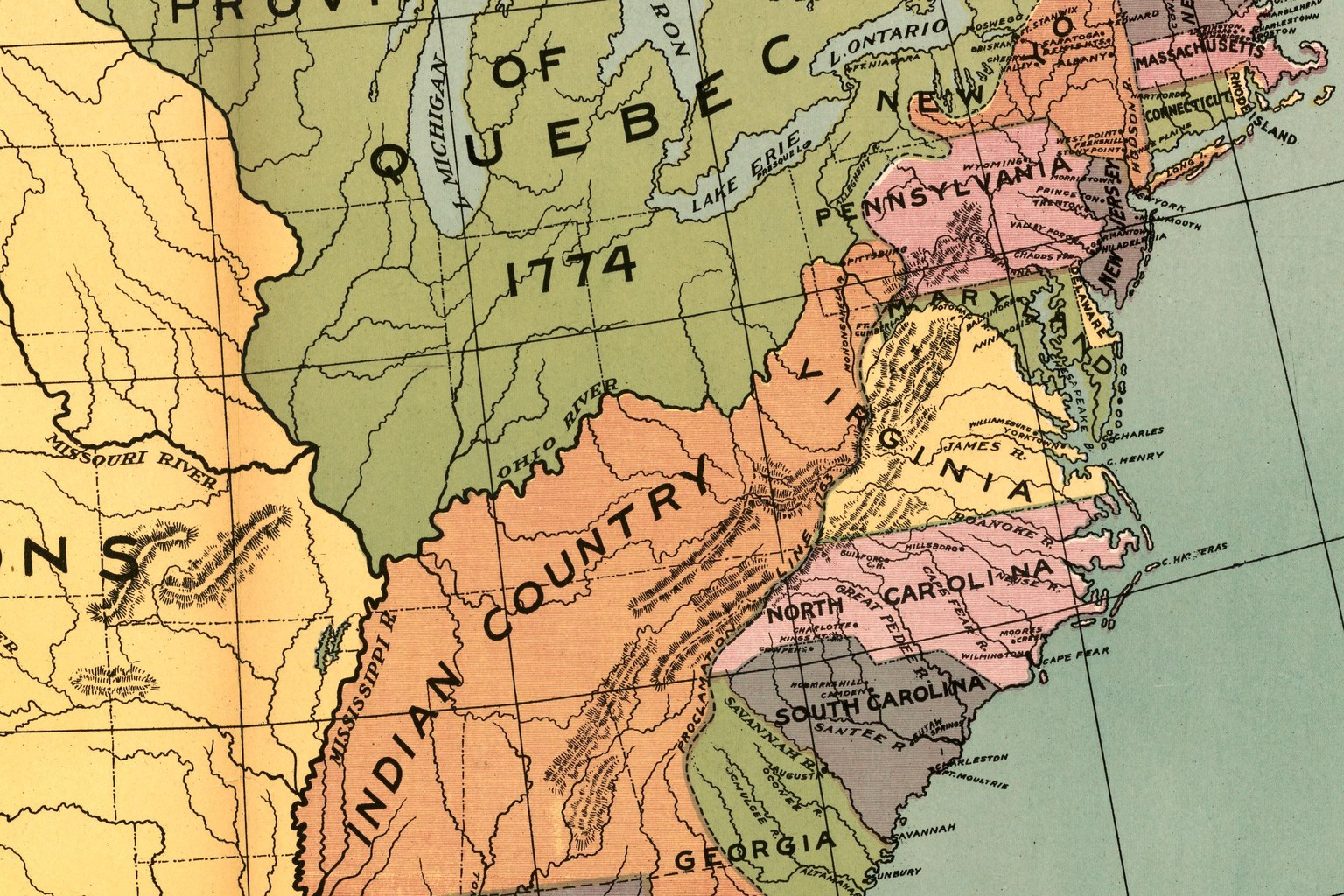
One of the most common “name several” questions on the 2025 Naturalization Civics Test is Q81: There were 13 original states. Name five. The officer is not looking for a history essay. You only need five correct names from the official list. The map above shows those same colonies along the Atlantic coast in 1774, before independence.
The official answer list (name any five)
Accepted answers, from the official USCIS 128 Civics Questions and Answers (2025 version):
| New England | Mid-Atlantic | South |
|---|---|---|
| New Hampshire | New York | Maryland |
| Massachusetts | New Jersey | Virginia |
| Rhode Island | Pennsylvania | North Carolina |
| Connecticut | Delaware | South Carolina |
| Georgia |
That is the full set of thirteen. On test day, pick five you can say clearly. You do not need all thirteen, and you do not need founding years or capitals for this question.
Memory trick: three geography clusters
Group the list the way the map looks, north to south:
- New England (4): New Hampshire, Massachusetts, Rhode Island, Connecticut
- Mid-Atlantic (4): New York, New Jersey, Pennsylvania, Delaware
- South (5): Maryland, Virginia, North Carolina, South Carolina, Georgia
A short drill that works for many people: learn one full cluster cold, then add one more state from each of the other two. That already gives you five. Example set: Massachusetts, Connecticut, New York, Pennsylvania, Virginia.
Say the names out loud. The civics test is oral, so silent reading alone is a weak rehearsal for interview day.
What people mix up
- Vermont, Maine, Florida, West Virginia are not on the Q81 list. Maine was part of Massachusetts for a long time; Vermont and West Virginia became states later; Florida was not one of the thirteen.
- “Colony” vs. “state.” The question says original states. The accepted names are the familiar state names above (for example Rhode Island, not a colonial charter title).
- You need five, not three. If you freeze after two, move to another cluster instead of forcing a wrong guess.
Connect it: Q82 and the Revolution block
Right after Q81, Q82 asks: What founding document was written in 1787? The accepted answer is the (U.S.) Constitution. A simple timeline helps:
- 1776 — Declaration of Independence (Q79)
- Revolution — important events such as Lexington and Concord, Declaration, Battle of Saratoga, Valley Forge, Yorktown (Q80)
- 1787 — Constitution written (Q82)
- Then the Federalist Papers and founding figures (Q83–Q86)
If you can place the thirteen states before the Constitution, Q81 and Q82 reinforce each other instead of competing for memory space.
One-minute review
| Prompt | Say this |
|---|---|
| Q81 — Name five original states | Any five from the table (example: Massachusetts, New York, Pennsylvania, Virginia, Georgia) |
| Q82 — Founding document written in 1787 | (U.S.) Constitution |
Study these related questions
- Colonial Period and Independence: Q64–Q87 in context, with audio
- George Washington and the Revolutionary War: Revolution leaders and events
- Declaration of Independence: July 4, 1776 and related answers
- Federalist Papers and Benjamin Franklin: the Constitution ratification block after Q82
- Free scored practice test: 20 questions like the interview, 12 correct to pass on the 2025 test
This is an evergreen study post. The answers come from the official USCIS 128 Civics Questions and Answers (2025 version), used for Form N-400 filed on or after October 20, 2025 (USCIS Policy Manual, Vol. 12, Part E, Ch. 2; Study for the Test). Map: Library of Congress.
This post summarizes public USCIS civics materials for educational study. It is not legal advice.