U.S. Wars on the 2025 Civics Test: From the War of 1812 to the Gulf War and 9/11
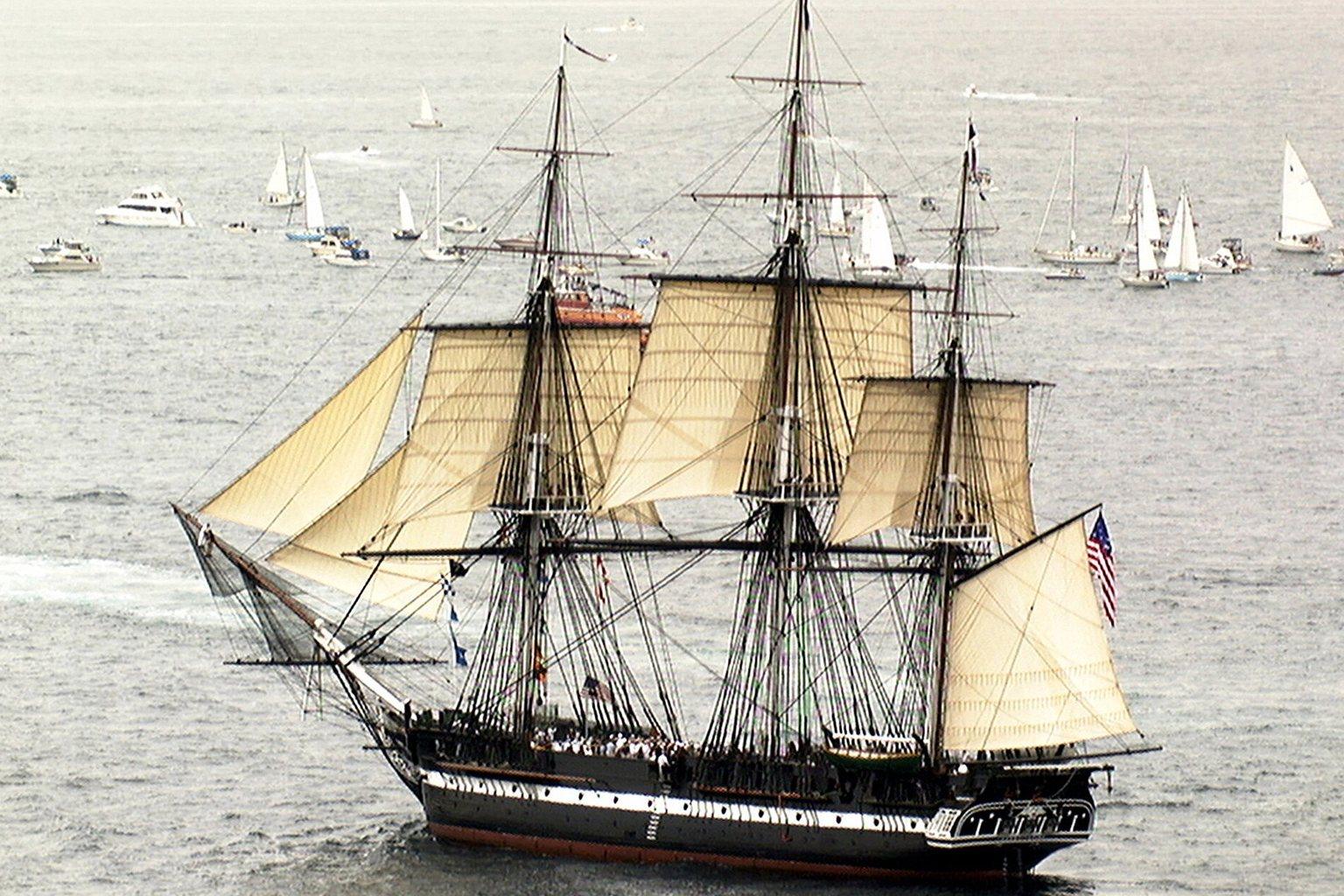
The 2025 Naturalization Civics Test asks about American wars in several places. Some questions just ask you to name one war from a century. Others ask why the United States entered a war, or what happened on September 11, 2001. This post gathers the war questions that our other history posts do not cover in depth: Q91, Q100, Q101, and Q114–Q116. The ship in the photo, USS Constitution, earned the nickname “Old Ironsides” in the War of 1812, one of the accepted answers below.
Name one war fought by the United States in the 1800s (Q91)
Name one war fought by the United States in the 1800s. Accepted answers (American History — B: 1800s):
- War of 1812 (1812–1815, against Great Britain)
- Mexican-American War (1846–1848)
- Civil War (1861–1865, North against South)
- Spanish-American War (1898)
Any one is enough. The easiest pick for most people is Civil War, because three more questions in the 1800s block are about it (Q92, Q93, Q96). Deep dive: Civil War, Lincoln, and the Emancipation Proclamation.
Connect it: the War of 1812 also shows up in two other questions. One accepted answer for James Madison (Q88) is “President during the War of 1812.” And Francis Scott Key wrote the words of “The Star-Spangled Banner” (Q123, the national anthem) in 1814, after watching the British attack on Fort McHenry in Baltimore.
Name one war fought by the United States in the 1900s (Q100)
Name one war fought by the United States in the 1900s. Accepted answers (American History — C: Recent American History and Other Important Historical Information):
- World War I
- World War II
- Korean War
- Vietnam War
- (Persian) Gulf War
Again, any one is enough. World War II is a strong pick because you will likely study it anyway: see World War II, FDR, and Eisenhower. Korea and Vietnam are in Cold War and Communism.
Do not mix up the centuries. The Civil War is an 1800s answer; World War I is a 1900s answer. Saying “Civil War” for the 1900s question is wrong.
Why did the United States enter World War I? (Q101)
World War I began in Europe in 1914. The United States entered in 1917. Accepted answers:
- Because Germany attacked U.S. (civilian) ships
- To support the Allied Powers (England, France, Italy, and Russia)
- To oppose the Central Powers (Germany, Austria-Hungary, the Ottoman Empire, and Bulgaria)
Shortest answer to remember: Germany attacked U.S. ships. (German submarines were sinking ships in the Atlantic.)
Nearby question: When did all women get the right to vote? (Q102) One accepted answer is after World War I (also 1920 or the 19th Amendment). More in Susan B. Anthony and women’s suffrage.
Why did the United States enter the Persian Gulf War? (Q114)
In August 1990, Iraq invaded its neighbor Kuwait. A U.S.-led coalition fought the war in early 1991. The one accepted answer:
- To force the Iraqi military from Kuwait
Memory hook: Gulf War = get Iraq out of Kuwait.
What major event happened on September 11, 2001? (Q115)
Accepted answers:
- Terrorists attacked the United States
- Terrorists took over two planes and crashed them into the World Trade Center in New York City
- Terrorists took over a plane and crashed into the Pentagon in Arlington, Virginia
- Terrorists took over a plane originally aimed at Washington, D.C., and crashed in a field in Pennsylvania
You only need one. The simplest: Terrorists attacked the United States.
65/20 note: Q115 is one of the 20 starred questions for applicants who qualify for the 65/20 special consideration. See Age 65/20, 50/20, and 55/15 exemptions for the full starred list.
Name one U.S. military conflict after the September 11, 2001 attacks (Q116)
Accepted answers:
- (Global) War on Terror
- War in Afghanistan
- War in Iraq
Any one is enough. War in Afghanistan follows most directly from 9/11.
One-minute review
| Question | Say this |
|---|---|
| Q91 — a war in the 1800s | Civil War (or War of 1812, Mexican-American War, Spanish-American War) |
| Q100 — a war in the 1900s | World War II (or World War I, Korean War, Vietnam War, Gulf War) |
| Q101 — why enter World War I | Germany attacked U.S. ships |
| Q114 — why enter the Gulf War | To force the Iraqi military from Kuwait |
| Q115 — September 11, 2001 | Terrorists attacked the United States |
| Q116 — a conflict after 9/11 | War in Afghanistan (or War in Iraq, War on Terror) |
Notice the “why” pattern across this block: World War I (ships attacked), World War II (Pearl Harbor), Korea and Vietnam (to stop the spread of communism), and the Gulf War (Iraq out of Kuwait). If you can say one reason for each war, you have most of the Recent American History war questions covered.
Study these related questions
- American History — B: 1800s — Q91 in context, with audio
- American History — C: Recent American History — Q100, Q101, and Q114–Q116 in context
- Free scored practice test — 20 questions like the interview, 12 correct to pass
This is an evergreen study post. The answers come from the official USCIS 128 Civics Questions and Answers (2025 version), used for Form N-400 filed on or after October 20, 2025 (USCIS Policy Manual, Vol. 12, Part E, Ch. 2). Dates and background in this post are for study context only; on the test, give one of the accepted answers. Check USCIS Check for Test Updates for answers that change with elections.
This post summarizes public USCIS civics materials for educational study. It is not legal advice.