USCIS English Reading Test: The Official Word List, How It's Scored, and 36 Practice Sentences
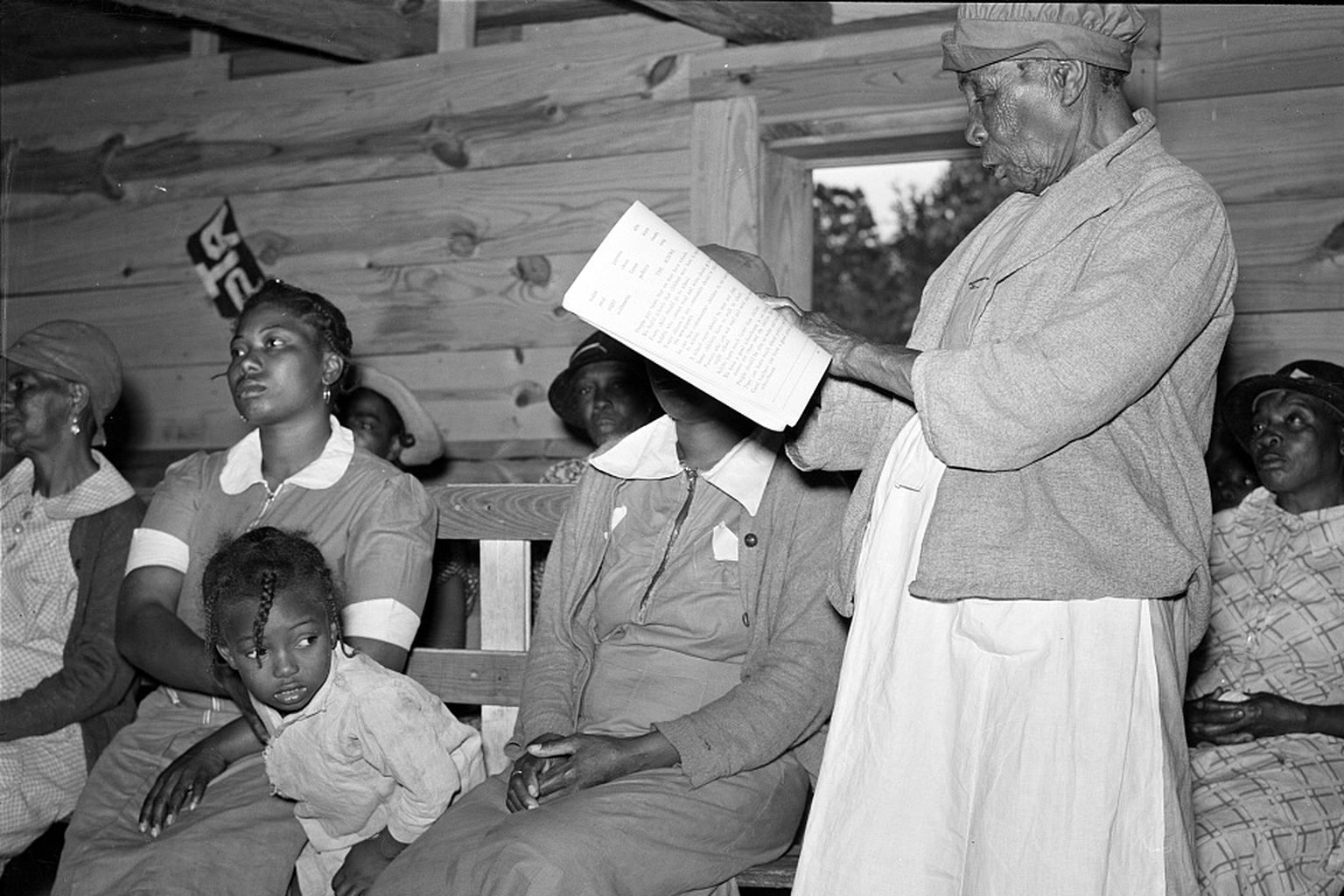
At your naturalization interview, the officer will hand you a sentence and ask you to read it out loud. That is the whole English reading test, and it is the shortest part of the interview. The woman in the photo above, 82 years old and reading her lesson to her adult class in 1939, is a good reminder that this skill can be learned at any age.
This post covers how the test works, how it is scored, the complete official word list, and 36 practice sentences that use only those words. For the companion writing test, see USCIS English Writing Test: Practice Sentences and How It’s Scored.
How the reading test works
From USCIS The Naturalization Interview and Test and the Policy Manual, Volume 12, Part E, Chapter 2:
- You must read aloud one out of three sentences correctly.
- The officer uses a standardized reading test form.
- As soon as you read one sentence correctly, the reading test stops. If your first sentence is good, you are done.
- The words come from the official Reading Test Vocabulary List (PDF). USCIS says the content “focuses on civics and history topics.”
USCIS publishes the word list, but not the actual test sentences. The practice sentences below were written by CitizenExams using only words from the official reading list. They are practice, not the real test.
How the reading test is scored
The Policy Manual says you pass if you read one of the three sentences “without extended pauses in a manner that the alien is able to convey the meaning of the sentence and the officer is able to understand the sentence.” It adds: “In general, the alien must read all content words but may omit short words or make pronunciation or intonation errors that do not interfere with the meaning.”
A sentence does not count if you:
- leave out a content word, or say a different word in its place,
- pause for a long time while reading, or
- make pronunciation or intonation errors so serious that the officer can’t understand the sentence.
In plain terms: the important words (names, places, holidays, and words like President, Congress, vote, largest) must all be there and recognizable. A small slip on a short word like the or of, or an accent, is normally fine.
What this looks like
Take the practice sentence “Who lives in the White House?” Under the rules above:
- Reading it smoothly with an accent: counts, as long as the officer understands you.
- Skipping “the” (“Who lives in White House?”): usually counts, because “the” is a short word and the meaning is clear.
- Saying “Who lives in the Capitol?”: doesn’t count. You replaced a content word.
- Stopping for a long time before “White House” and sounding it out letter by letter: may not count, because of the extended pause.
The officer makes the final call, so practice until each sentence comes out in one smooth breath.
The official reading vocabulary list
This is the complete list from the USCIS Reading Vocabulary for the Naturalization Test (PDF, marked rev. 08/08), grouped the way USCIS groups it.
| Group | Words |
|---|---|
| People | Abraham Lincoln, George Washington |
| Civics | American flag, Bill of Rights, capital, citizen, city, Congress, country, Father of Our Country, government, President, right, Senators, state/states, White House |
| Places | America, United States, U.S. |
| Holidays | Presidents’ Day, Memorial Day, Flag Day, Independence Day, Labor Day, Columbus Day, Thanksgiving |
| Question words | How, What, When, Where, Who, Why |
| Verbs | can, come, do/does, elects, have/has, is/are/was/be, lives/lived, meet, name, pay, vote, want |
| Other (function) | a, for, here, in, of, on, the, to, we |
| Other (content) | colors, dollar bill, first, largest, many, most, north, one, people, second, south |
Two things stand out. First, the list is small: fewer than 70 entries. Second, it has six question words, so many reading sentences you practice with will be short questions like “Who was the first President?”
The words USCIS labels function words (a, for, here, in, of, on, the, to, we) are the “short words” the Policy Manual allows you to miss. Everything else on the list carries meaning, so treat it as a content word you must read.
36 practice sentences (official words only)
Read each one aloud, at a normal speed, without stopping. Every word in every sentence is on the official list.
People and history
- Who was the first President?
- Who was the second President?
- Who is the Father of Our Country?
- Who was George Washington?
- Who was Abraham Lincoln?
- Who lives in the White House?
- Who lived in the White House first?
- Where is the White House?
Government
- What is the capital of the United States?
- Where do Senators meet?
- When does Congress meet?
- Where does Congress meet?
- Who elects Congress?
- Who elects the President?
- How many Senators does a state have?
- What is the name of the President?
- Who can vote for President?
- Why do people want to vote?
- Why do we have a Bill of Rights?
- Name one right in the Bill of Rights.
Places and the flag
- How many states are in the United States?
- What state has the most people?
- What is the largest state?
- What is the largest city in the United States?
- What country is north of the United States?
- What country is south of the United States?
- What are the colors of the American flag?
- Who is on the dollar bill?
- Why do people come to America?
Holidays
- When is Flag Day?
- When is Independence Day?
- When is Labor Day?
- When is Memorial Day?
- When is Columbus Day?
- When is Thanksgiving?
- When is Presidents’ Day?
How to practice (5 minutes a day)
- Read the word list out loud once. Pay extra attention to the longer names: Independence Day, Thanksgiving, Father of Our Country, Abraham Lincoln.
- Read 6 sentences from above, a different group each day. Say each one twice: once slowly, once at normal speed.
- Record yourself on your phone and listen back. Would someone who doesn’t know the sentence understand every important word?
- Practice the answers too. Many of these questions match civics test topics, and the writing list has the answers (for example, “Washington was the first President.”). Our English practice page lets you tap to hear sentences built from both lists and try a test-day round of 3.
If you don’t pass the reading test
You get a second chance. If you fail any part of the English or civics test at your first interview, USCIS retests you between 60 and 90 days after it, and only on the part you failed. The officer must use a different test form. See Failed the Civics or English Test? How the USCIS Re-Test Works.
Who doesn’t take the English test
Under the Policy Manual, you are exempt from the English requirement (you still take civics, and can use an interpreter) if, when you file, you are 50 or older with 20 years as a permanent resident, or 55 or older with 15 years. A medical disability exception (Form N-648) can also apply. See USCIS Exceptions and Accommodations and our post on civics test age exemptions.
Keep going
- English reading and writing practice: hear sentences, read them aloud, and type dictation
- USCIS English Writing Test: Practice Sentences and How It’s Scored
- English Test for Naturalization: Speaking, Reading, and Writing Tips
- Naturalization Interview Day: What to Expect
- Free scored civics practice test
Sources: USCIS Policy Manual, Volume 12, Part E, Chapter 2: English and Civics Testing; USCIS The Naturalization Interview and Test; USCIS Reading Vocabulary for the Naturalization Test (PDF), linked from Study for the Test. Checked October 19, 2026. Photo: Marion Post Wolcott, Library of Congress, Prints & Photographs Division, FSA/OWI Collection, LC-USF34-051531-D.
CitizenExams is an independent study site and is not affiliated with USCIS. This post summarizes public USCIS materials for study. It is not legal advice.