Virginia on the 2025 Civics Test: 10 Answers With a Virginia Story, From Jamestown to the Pentagon
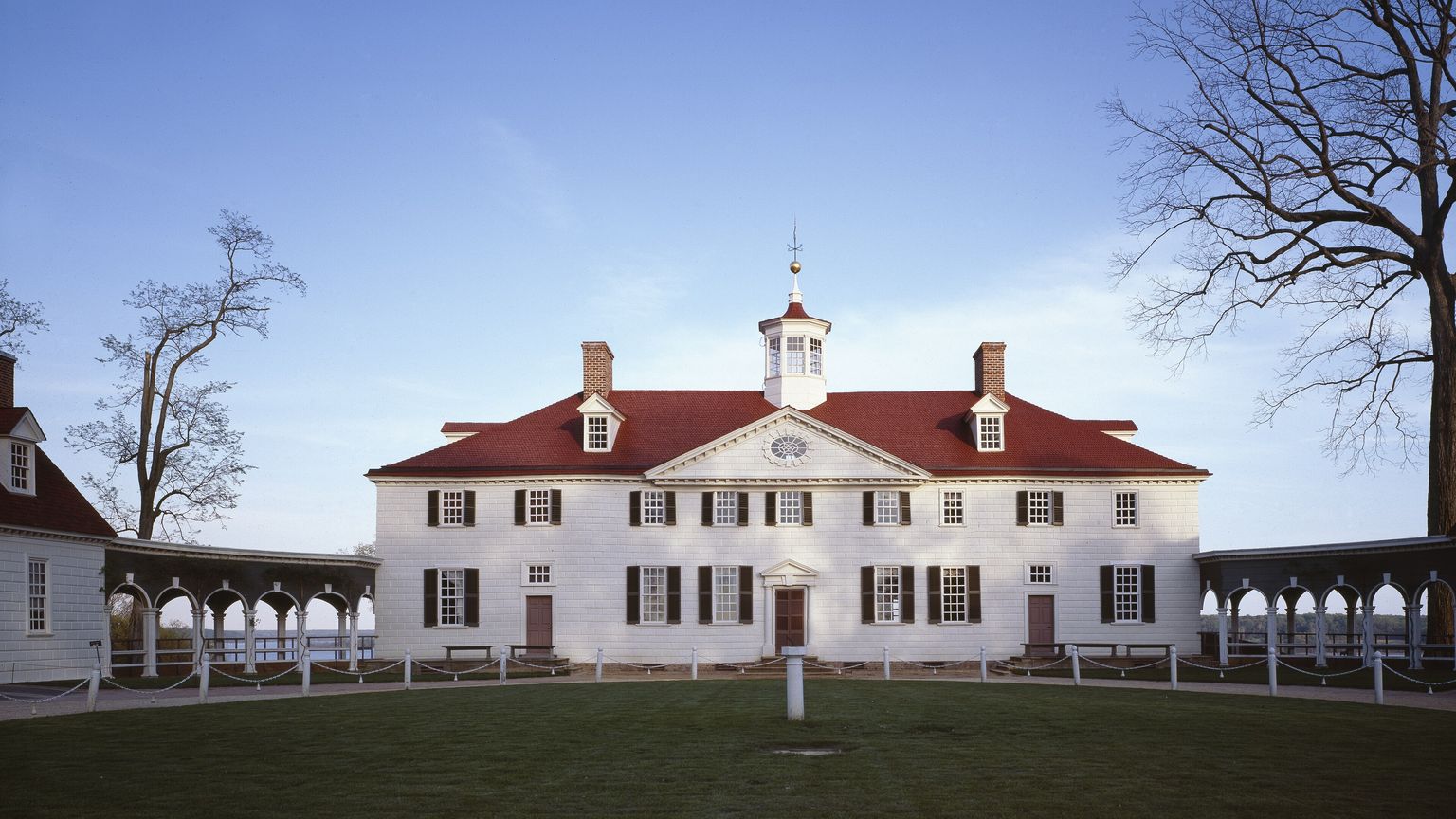
A lot of American history happened in one state. If you read the 2025 civics test with a map, Virginia keeps coming up: the first permanent English settlement, the first enslaved Africans in the English colonies, three founders, the battle that ended the Revolution, the surrender that ended the Civil War, and the Pentagon on September 11, 2001.
That makes Virginia a useful memory hook. Ten official answers become one story, from 1607 to 2001. You don’t need to live in Virginia to use it. Answers in bold are the exact USCIS wording; the officer only needs one accepted answer unless the question asks for more.
1. Jamestown, 1607: why colonists came (Q73)
In 1607, 104 English men and boys arrived, and on May 13 they chose Jamestown, Virginia for their settlement. It became the first permanent English settlement in North America, funded by the Virginia Company (NPS). The company’s investors hoped to make money, which links Jamestown to one of the accepted reasons colonists came.
- Q73. The colonists came to America for many reasons. Name one. Freedom, Political liberty, Religious freedom, Economic opportunity, or Escape persecution.
Jamestown was not empty land. American Indians had lived in the area long before the English arrived, which is Q74: American Indians / Native Americans.
2. Point Comfort, 1619: who was enslaved (Q75)
In late August 1619, an English privateer ship, the White Lion, brought enslaved Africans to Old Point Comfort in the colony of Virginia, now Fort Monroe National Monument in Hampton. They had been taken by force from the Kingdom of Ndongo in present-day Angola. The National Park Service calls this the first landing of enslaved Africans in English-occupied North America, the start of 246 years of slavery that ended in 1865 (NPS).
- Q75. What group of people was taken and sold as slaves? Africans or People from Africa.
Our post on colonists and slavery (Q73, Q75) has more on these two questions.
3. The Virginia Declaration of Rights, 1776 (Q14)
Written by George Mason and adopted on June 12, 1776, the Virginia Declaration of Rights says that “all power is vested in, and consequently derived from, the people.” The National Archives notes that Jefferson drew on it for the opening of the Declaration of Independence and that it became a basis of the Bill of Rights (National Archives).
- Q14. Many documents influenced the U.S. Constitution. Name one. One accepted answer is Virginia Declaration of Rights. The others are the Declaration of Independence, Articles of Confederation, Federalist Papers, Anti-Federalist Papers, Fundamental Orders of Connecticut, Mayflower Compact and Iroquois Great Law of Peace.
See documents that influenced the Constitution (Q14) for all eight.
4. George Washington (Q86)
Washington was born in 1732 in the Northern Neck of Virginia, at what is now George Washington Birthplace National Monument (NPS). His home, Mount Vernon (the photo above), stands on the Potomac River in Fairfax County.
- Q86. George Washington is famous for many things. Name one. “Father of Our Country”, First president of the United States, General of the Continental Army, or President of the Constitutional Convention.
5. Thomas Jefferson (Q78, Q87)
Two of Jefferson’s accepted answers name Virginia directly.
- Q87. Thomas Jefferson is famous for many things. Name one. Writer of the Declaration of Independence, Third president of the United States, Doubled the size of the United States (Louisiana Purchase), First Secretary of State, Founded the University of Virginia, or Writer of the Virginia Statute on Religious Freedom.
- Q78. Who wrote the Declaration of Independence? (Thomas) Jefferson.
6. James Madison (Q83, Q88)
Madison’s home, Montpelier, is in Orange County, Virginia (Montpelier).
- Q88. James Madison is famous for many things. Name one. “Father of the Constitution”, Fourth president of the United States, President during the War of 1812, or One of the writers of the Federalist Papers.
- Q83. The Federalist Papers supported the passage of the U.S. Constitution. Name one of the writers. (James) Madison works here too, as do Hamilton, Jay and Publius.
Washington, Jefferson and Madison together: Jefferson, Madison and Hamilton (Q87–Q89) and George Washington and the Revolutionary War.
7. Yorktown, 1781 (Q80)
In the fall of 1781, Washington’s American and French forces besieged the British army of General Cornwallis at Yorktown. On October 19, 1781, Cornwallis surrendered. The NPS says this effectively ended the war and ensured independence (NPS).
- Q80. The American Revolution had many important events. Name one. One accepted answer is (Battle of) Yorktown (British surrender at Yorktown). The others are Bunker Hill, the Declaration of Independence, Washington Crossing the Delaware (Battle of Trenton), Saratoga and Valley Forge.
8. One of the 13 original states (Q81)
- Q81. There were 13 original states. Name five. Virginia is one. Our 13 original states post has an easy way to remember five.
9. Appomattox, 1865 (Q93)
On April 9, 1865, General Robert E. Lee surrendered the Confederate Army of Northern Virginia to General Ulysses S. Grant in the McLean family’s parlor in the village of Appomattox Court House, Virginia (NPS).
- Q93. The Civil War had many important events. Name one. One accepted answer is (Surrender at) Appomattox. Others include Fort Sumter, the Emancipation Proclamation, Vicksburg, Gettysburg, Sherman’s March, Antietam/Sharpsburg, and Lincoln was assassinated.
More in Civil War, Lincoln and the Emancipation Proclamation.
10. The Pentagon, September 11, 2001 (Q115)
This is the only answer on the test that says “Virginia” word for word.
- Q115. What major event happened on September 11, 2001 in the United States? Terrorists attacked the United States is the short answer. One of the longer accepted answers is Terrorists took over a plane and crashed into the Pentagon in Arlington, Virginia.
Short is safer at the interview: “Terrorists attacked the United States” is complete. See U.S. wars and 9/11 on the civics test.
The Virginia story in one breath
Say this out loud once a day for a week:
1607 Jamestown (economic opportunity), 1619 Africans at Point Comfort, 1776 Virginia Declaration of Rights, Washington, Jefferson, Madison, 1781 Yorktown, one of the 13 states, 1865 Appomattox, 2001 the Pentagon.
Each piece is one practice answer. Open the Colonial Period and Independence questions, then the 1800s and recent history sets, and check yourself with the 20-question practice test. Prefer to listen? Listen reads every question and answer.
If you live in Virginia: your state answers
Four questions have answers that depend on where you live (state-specific questions). For Virginia residents, as of October 31, 2026:
| Question | Virginia answer |
|---|---|
| Q23. Who is one of your state’s U.S. senators now? | Tim Kaine or Mark R. Warner |
| Q61. Who is the governor of your state now? | Abigail Spanberger |
| Q62. What is the capital of your state? | Richmond |
| Q29. Name your U.S. representative. | Depends on your congressional district. Look it up on My officials. |
Election note: Mark Warner’s Senate seat is on the November 3, 2026 ballot (Virginia Department of Elections), and so are all 11 Virginia House seats. Answers change only when the winners are sworn in, in January 2027, not on election night. Our election week study plan explains why.
Sources
- USCIS: 2025 Civics Test, 128 Questions and Answers (PDF) (all answers quoted above)
- National Park Service: A Short History of Jamestown; Arrival of the First Africans in 1619; George Washington Birthplace National Monument; Yorktown Battlefield; The Surrender, Appomattox Court House
- National Archives: The Virginia Declaration of Rights
- James Madison’s Montpelier: James Madison
- Virginia Department of Elections: November 3, 2026 General Election, federal offices
This post is for study. It is not legal advice, and CitizenExams is not affiliated with USCIS.
Photo: Carol M. Highsmith, Library of Congress, via Wikimedia Commons (public domain).