Voting Amendments on the 2025 Civics Test (Q63, Q97, Q98, Q102)
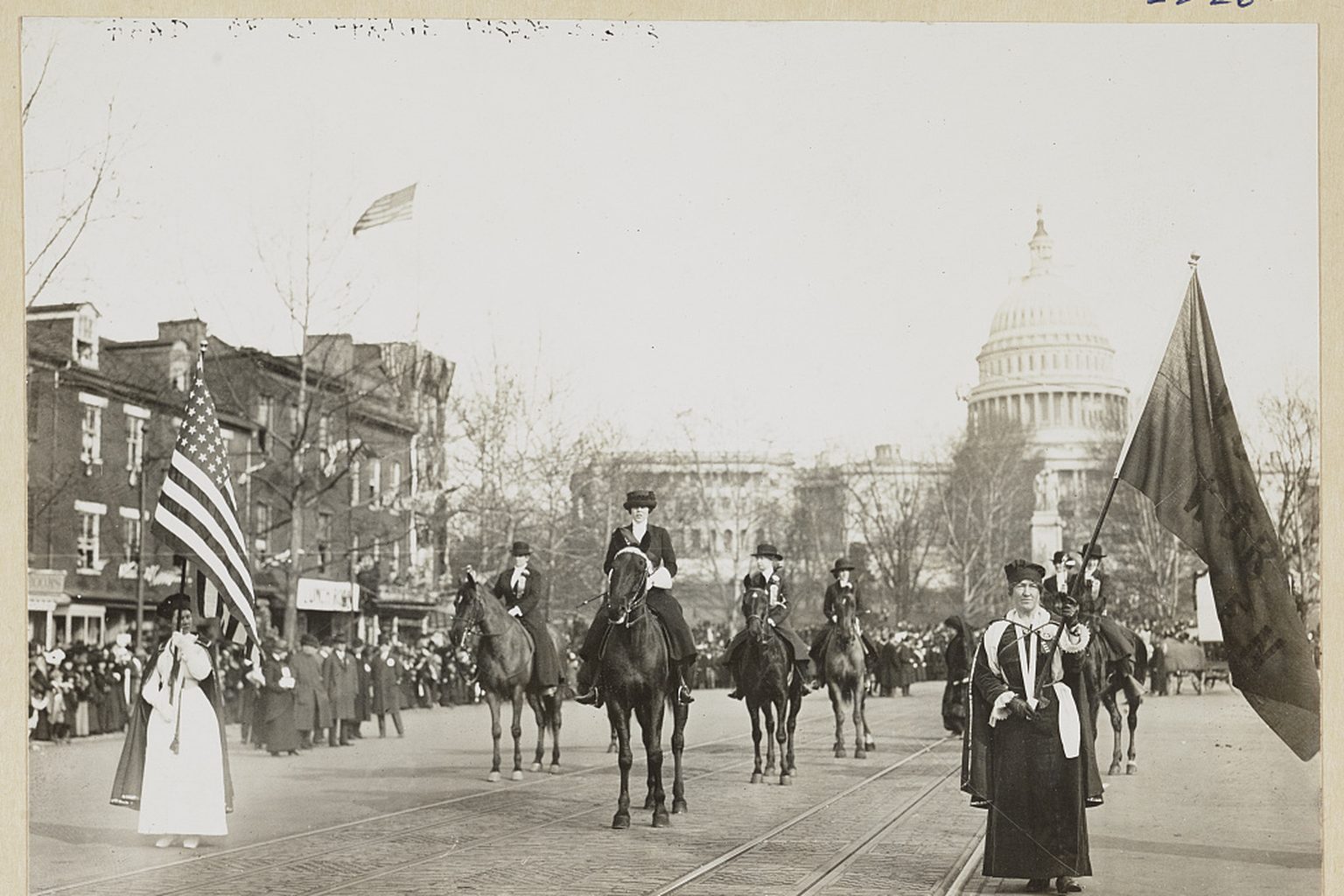
Who can vote—and when that right expanded—shows up in several places on the 2025 Naturalization Civics Test. The hero image above is the 1913 suffrage parade in Washington, D.C., a movement that led to the 19th Amendment. Learn this cluster as one story and you cover Q63, Q97, Q98, and Q102 with short, accepted wording from the official bank.
Q63 — Four amendments about who can vote (describe one)
Question: There are four amendments to the U.S. Constitution about who can vote. Describe one of them.
Accepted answers (any one):
| Say this (official wording) | Amendment people usually mean |
|---|---|
| Citizens eighteen (18) and older (can vote). | 26th Amendment |
| You don’t have to pay (a poll tax) to vote. | 24th Amendment |
| Any citizen can vote. (Women and men can vote.) | 19th Amendment |
| A male citizen of any race (can vote). | 15th Amendment |
The officer needs one correct description from that list—not all four, and not a long history lecture. Pick the line you can say clearly under pressure.
Q97 — Citizenship in the 14th Amendment
Question: What amendment says all persons born or naturalized in the United States, and subject to the jurisdiction thereof, are U.S. citizens?
Accepted answer: 14th Amendment
This is the citizenship rule many applicants meet through naturalization—the same path as Form N-400. Related civics wording on how people become citizens appears in Q68 (be born under the 14th Amendment conditions, naturalize, or derive citizenship under conditions set by Congress).
Q98 — When all men got the right to vote
Question: When did all men get the right to vote?
Accepted answers (any one):
- After the Civil War
- During Reconstruction
- (With the) 15th Amendment
- 1870
Q102 — When all women got the right to vote
Question: When did all women get the right to vote?
Accepted answers (any one):
- 1920
- After World War I
- (With the) 19th Amendment
For the 1800s women’s rights leaders question (Q99), see Susan B. Anthony and women’s suffrage.
One-minute review table
| Prompt | Say this (pick one accepted line) |
|---|---|
| Q63 — Describe one voting amendment | e.g. Citizens eighteen (18) and older (can vote). |
| Q97 — Born or naturalized = citizens | 14th Amendment |
| Q98 — When all men got the vote | e.g. (With the) 15th Amendment or 1870 |
| Q102 — When all women got the vote | e.g. 1920 or (With the) 19th Amendment |
Practice tip
Say each answer out loud. The civics test is oral. Then take a free scored practice test (20 questions, 12 correct to pass on the 2025 path) and come back a few times a week—that returning practice habit is what interview nerves usually steal. Browse the Rights and Responsibilities section on the practice pages for more context.
Study these next
- Citizen rights and responsibilities
- Susan B. Anthony and women’s suffrage
- Civil War and Lincoln
- Which civics test: 2008 vs 2025
- Free scored practice test
This is an evergreen study post. Answers come from the official USCIS 128 Civics Questions and Answers (2025 version), used for Form N-400 filed on or after October 20, 2025 (Study for the Test; USCIS Policy Manual, Vol. 12, Part E, Ch. 2). Photo: Library of Congress.
This post summarizes public USCIS civics materials for educational study. It is not legal advice.