Who Elects Senators? The 17th Amendment and Q31–Q34
Four questions in a row on the 2025 civics test sound almost the same: Who does a senator represent? Who elects senators? Who does a representative represent? Who elects representatives? (Q31–Q34). The answers are short, and they follow one simple pattern: senators belong to the whole state, representatives belong to a district.
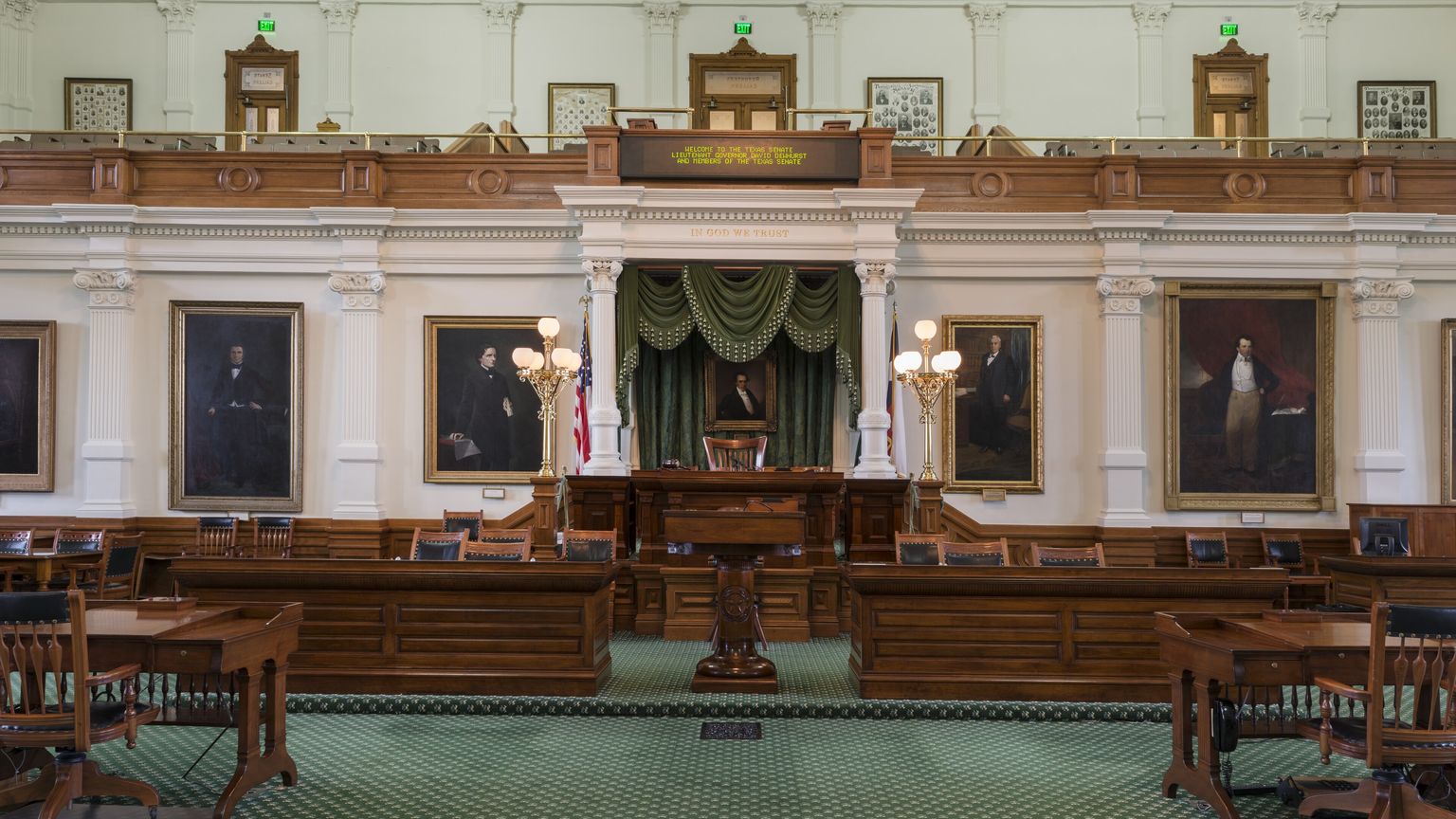
There is also a good story hiding in Q32. For more than 120 years under the Constitution, ordinary voters did not elect U.S. senators. State lawmakers did, in rooms like the state Senate chamber in the photo above. That changed in 1913.
The four questions and the answers
Any one of these answers is accepted (USCIS 128 questions PDF):
| Question | Accepted answers | Easiest to say |
|---|---|---|
| Q31 Who does a U.S. senator represent? | Citizens of their state · People of their state | “People of their state.” |
| Q32 Who elects U.S. senators? | Citizens from their state | “Citizens from their state.” |
| Q33 Who does a member of the House of Representatives represent? | Citizens in their (congressional) district · People from (in) their (congressional) district | “People in their district.” |
| Q34 Who elects members of the House of Representatives? | Citizens from their (congressional) district | “Citizens from their district.” |
The pattern: say state for senators and district for representatives. Then add “people” if the question asks who they represent, or “citizens” if it asks who elects them. Only citizens can vote in federal elections, which is why the “elects” answers say citizens.
Taking the 2008 test (N-400 filed before Oct. 20, 2025)? Only one of these is on the old list: “Who does a U.S. Senator represent?” Answer: all people of the state (USCIS 100 questions PDF). Not sure which test you take? See Which Civics Test Am I Taking?
State vs. district, in one picture
Every state is one big circle. Inside it are smaller circles, the congressional districts.
- Two senators cover the whole circle. Every voter in the state can vote for them, and they speak for everyone who lives there (Q27: each state has two senators).
- Each representative covers one small circle. You vote only for the representative of the district where you live (Q29 asks you to name yours).
- The number of small circles depends on the state’s population (Q35). There are 435 districts in total (Q24). In a state with only one representative, such as Wyoming or Vermont, the district is the whole state.
Want the details on how the 435 seats are divided? Read Why Some States Have More Representatives: The Census and Q35.
The story behind Q32: the 17th Amendment
The original Constitution treated the two parts of Congress differently:
- House: members are “chosen every second Year by the People of the several States” (Article I, Section 2). Voters picked representatives from the start.
- Senate: each state’s two senators were “chosen by the Legislature thereof, for six Years” (Article I, Section 3). The state legislature voted, not the people.
By the early 1900s, many Americans wanted that changed. According to the National Archives, some state legislatures deadlocked for months or years and left Senate seats empty, and reformers complained that party machines and special interests controlled the choice (National Archives: 17th Amendment). Congress passed the 17th Amendment on May 13, 1912, and it was ratified on April 8, 1913. Its first sentence says the Senate is made up of “two Senators from each State, elected by the people thereof, for six years.”
That sentence is the answer to Q32 in 1913 English. “Elected by the people thereof” means citizens from their state.
The 17th Amendment is not on the USCIS list of amendments to know by number, so you do not need to say “17th” at the interview. It just helps the answer make sense.
Empty seats: appointed senators, elected representatives
The 17th Amendment also covers what happens when a senator dies or resigns. The governor calls an election, and the state legislature may let the governor appoint someone to serve until voters fill the seat. A House seat is different: the Constitution says the governor issues “Writs of Election,” so an empty House seat is filled only by a special election (Article I, Section 2).
Why does this matter for the test? If one of your senators was appointed, that person is still a U.S. senator now, and still a correct answer to Q23. Check your current names on My Officials.
How Q31–Q34 connect to the other Congress questions
| Question | Answer | How it fits |
|---|---|---|
| Q22 How long is a term for a U.S. senator? | Six (6) years | Only about one-third of the Senate is elected every two years (Article I, Section 3) |
| Q25 How long is a term for a member of the House? | Two (2) years | All 435 seats are on the ballot every two years |
| Q26 Why do representatives serve shorter terms? | To more closely follow public opinion | District voters can replace them quickly |
| Q28 Why does each state have two senators? | Equal representation (for small states) · The Great Compromise | Senators speak for the state as a whole, big or small |
| Q23 / Q29 Your senators and representative | Answers will vary | The people chosen by Q32 and Q34 voters in your state and district |
“Now” means now: November and December 2026
The people elected on November 3, 2026 do not take office until the new Congress begins on January 3, 2027 (20th Amendment). If your interview is before then, the current senators and representative are still the correct answers to Q23 and Q29, even if they lost or did not run. More on timing: The November 3 Midterms and Your Civics Test.
D.C. and territory residents: for Q23, say that D.C. (or your territory) has no U.S. senators. For Q29, you may name your nonvoting Delegate or Resident Commissioner, or say the territory has no voting representative (USCIS 128 questions PDF).
Watch out for these traps
- “The state legislature elects senators.” That was true before 1913. Today the answer is citizens from their state.
- “The President picks senators.” No. Presidents nominate judges and Cabinet members, not members of Congress.
- Swapping “state” and “district.” Senators = state. Representatives = district. Say the word out loud with the job: “Senator, state.”
- Saying “everybody in America.” Each member of Congress answers to the voters who elected them: one state, or one district.
Quick self-check
Say each answer out loud before you open the box.
- Who does a U.S. senator represent?
- Who elects U.S. senators?
- Who does a member of the House of Representatives represent?
- Who elects members of the House of Representatives?
- Before 1913, who chose U.S. senators?
- Why do U.S. representatives serve shorter terms than senators?
- Citizens (people) of their state. (Q31)
- Citizens from their state. (Q32)
- Citizens (people) in their congressional district. (Q33)
- Citizens from their congressional district. (Q34)
- The state legislatures. The 17th Amendment (1913) gave the vote to the people.
- To more closely follow public opinion. (Q26)
Question 5 is not on the USCIS list. It is here to help you remember Q32.
Study these next
- Practice the whole System of Government section: American Government B
- Look up your senators, representative and governor: My Officials
- Hear the questions read out loud: Listen
- Related: Congress on the 2025 Civics Test: House and Senate · Civics Test Questions That Depend on Where You Live · Checks and Balances, Explained (Q15)
- Ready to test yourself? Take a practice test.
Sources: USCIS, 2025 Civics Test, 128 Questions and Answers (PDF) (Q22–Q29, Q31–Q35); USCIS, 100 Civics Questions and Answers, 2008 version (PDF); USCIS, Study for the Test; National Archives, 17th Amendment to the U.S. Constitution: Direct Election of U.S. Senators (1913); National Archives, The Constitution of the United States: A Transcription (Art. I §§2, 3); National Archives, The Constitution: Amendments 11–27 (17th and 20th Amendments). Photo: Carol M. Highsmith, Library of Congress, via Wikimedia Commons (public domain).
This post is general study information, not legal advice. CitizenExams is an independent study site and is not affiliated with USCIS.